An influencer-sponsored post is promotional content that a creator publishes on their own account or channel as part of a compensated brand relationship. Compensation can include money, free products or services, or another benefit. The defining arrangement is creator publication to the creator’s audience—not simply that money was spent. A brand may separately commission creator-made assets for its own channels or pay a platform to promote or boost creator content. Because one collaboration can include several of these uses, brands should specify the publisher, deliverables, compensation, distribution, disclosure responsibilities, and usage or amplification rights.
What is a Sponsored Post? · How to Create the Perfect Sponsored Post - Intellifluence · What Is a Sponsored Post? Definition, Examples, and FTC Rules
Quick answer
An influencer-sponsored post is content a creator publishes to their own audience in exchange for money, free products, services, or another commercial benefit from a brand. It differs from a promoted or boosted post, where media spend pays the platform to expand distribution. A creator post can later be amplified, but publication, content usage rights, and paid amplification are separate arrangements that brands should document.
Decision rule
Classify the arrangement by who publishes the content, who receives payment, and whether platform media spend is involved; for a compensated creator post, require a clear commercial-relationship disclosure and an assigned compliance check.
- When The creator receives money, products, services, or another benefit to publish promotional content to their own audience
- Describe it as an influencer-sponsored post. Document the deliverables and require a clear, prominent disclosure of the brand relationship, with the brand assigning someone to check compliance before publication.
- When The creator produces content for the brand but does not publish it to their audience
- Describe it as creator-produced content or commercial UGC, and state how and where the brand may use it.
- When The brand pays a platform to expand distribution of creator content
- Describe the promoted, boosted, or other paid placement separately and confirm that the brand has the required usage and advertising permissions.
- When A sponsored creator post will also receive paid amplification
- Document both arrangements: creator publication and disclosure requirements, plus the paid-media setup, audience control, budget, duration, and relevant usage rights.
- When The creator independently mentions the brand without an agreed commercial relationship or other material connection
- Do not automatically classify the mention as a brand-arranged sponsored post.
Comparison
| Criterion | Influencer ad | Influencer marketing | Creator-produced UGC | Organic creator content | Paid amplification |
|---|---|---|---|---|---|
| What it describes | A promotional creator-content arrangement or output | The broad brand–creator marketing category | Content created for a brand, often in a user-style format | Creator content or distribution without the relevant paid component | Media spend used to expand content distribution |
| Creator publication required? | Not always; the term is ambiguous | Depends on the partnership | Usually not | Usually published through creator-controlled channels | Not necessarily |
| Paid media required? | Not always | Not always | Not inherently | No, when “organic” refers to distribution | Yes |
| Audience access required? | Not always | Often relevant, but format-dependent | No | The creator may reach an existing audience | Depends on targeting and placement |
| Key point to document | Deliverables, publisher, compensation, and rights | Partnership model and campaign scope | Ownership or license and permitted uses | Whether a commercial relationship exists and what “organic” means | Advertising permissions, identity or account setup, channels, and duration |
What Is an Influencer-Sponsored Post?
An influencer-sponsored post is content a creator publishes on their own social account or channel in exchange for compensation or another commercial benefit from a brand. It generally combines:
- A brand–creator commercial relationship, such as payment, free products, free services, or another benefit.
- Creator-led content, presented in the creator’s voice or established content style.
- A brand, product, service, or promotional message included in the content.
- Publication to the creator’s audience on the creator’s feed, channel, story, video, or other content surface.
That last element separates a sponsored creator post from creator-produced assets delivered only to a brand. The same creator can make both, but content that appears only on the brand’s channels does not provide access to the creator’s audience in the same way.
A sponsored influencer post is also different from a promoted or boosted post. In the creator partnership, the brand compensates the creator for content and publication. In promotion or boosting, the advertiser pays the social platform to expand distribution to a targeted or wider audience. A brand can combine the arrangements by sponsoring a creator post and later amplifying it with media spend, but amplification and the necessary advertising permissions should be agreed separately.
Terms such as “influencer ad” are sometimes used broadly for sponsored posts, creator-made brand assets, or paid ads using creator content. Brands should therefore name the actual arrangement rather than rely on the broad label alone.
What is a Sponsored Post? · How to Create the Perfect Sponsored Post - Intellifluence · What Is a Sponsored Post? Definition, Examples, and FTC Rules
How an Influencer Ad Works
A typical arrangement begins when a brand identifies an objective and chooses a creator whose audience, subject matter, or content style appears suitable. The parties then agree on what will be created, where it will appear, how the creator will be compensated, and how the brand may use the finished work.
A practical sequence is:
- Set the intended outcome. Define what the promotion is supposed to accomplish and whom it should reach.
- Identify the creator and format. Decide whether the creator is being engaged for audience access, content production, recognizable presentation, or a combination of these.
- Agree on deliverables. Record the number and type of assets, required elements, deadlines, publication expectations, and revision process.
- Define distribution. State whether the content will appear on the creator’s account, the brand’s channels, paid-media placements, or multiple destinations.
- Confirm compensation and rights. Separate payment for producing or publishing the content from permission to repost, edit, amplify, or use it for a defined period.
- Review and publish or deliver. Follow the agreed approval process, then publish the post or transfer the approved assets.
This sequence explains where an influencer ad fits, but it is not a full campaign plan. Campaign planning also involves budgeting, creator vetting, launch management, tracking, and reporting.
Where the Term Appears in a Creator Workflow
In the workflow described by Collabstr, brands can search for creators, create campaign briefs, negotiate deliverables and usage rights, route content for approval, handle payment, and review performance reporting. This shows the operational context in which an influencer-ad deliverable may be produced and managed.
That platform workflow should not be treated as a universal definition of “influencer ads.” It supports the practical need to clarify deliverables, rights, approval, payment, and reporting, but it does not establish authoritative boundaries among influencer ads, influencer marketing, UGC, organic creator content, and paid amplification.
Common Sponsored-Post Formats and How to Recognize Them
A sponsored influencer post can use most formats already native to a creator’s platform, including:
- Feed images, text posts, or carousels
- Short-form or long-form videos
- Stories and other temporary content
- Tutorials, demonstrations, reviews, routines, or personal recommendations
- Livestream segments
- Podcast or video sponsorship segments
The content often resembles the creator’s regular work: the creator may demonstrate a product, incorporate it into a story or routine, discuss an experience, tag the brand, share a link, or provide a discount code. Those creative features can suggest a commercial partnership, but they do not replace disclosure.
More direct partnership signals include clear wording such as “This post is sponsored by [Brand]”, a conspicuous #ad or #sponsored label, or a platform-native “Paid partnership with [Brand]” notice. The disclosure should be easy to notice with the content rather than buried among hashtags or placed where readers are unlikely to see it. Brand tags, discount codes, polished product placement, or phrases such as “partner” or “collab” may provide context, but they can be ambiguous on their own.
Do not confuse a creator-partnership disclosure with a platform advertising label. A post marked “Sponsored” by the platform and accompanied by an advertising call-to-action such as “Learn more” may be a paid placement distributed through the platform’s advertising system. By contrast, an influencer-sponsored post begins as content published through the creator relationship to the creator’s audience. If that creator post is boosted, promoted, or otherwise run as an ad, both arrangements coexist: the commercial creator relationship still needs appropriate disclosure, while the platform may add its own ad-placement label.
Related terms also have different boundaries:
- Influencer marketing is the broader category of brand–creator partnerships; a sponsored post is one possible output.
- Creator-produced UGC may be delivered to the brand without appearing on the creator’s account. It is not automatically a sponsored influencer post.
- Paid amplification means applying media spend to expand distribution. It is separate from the creator’s production or publication fee and requires the appropriate content-use and advertising permissions.
- Independent organic content is content a creator publishes without an agreed commercial relationship. A favorable brand mention is not automatically sponsored merely because it resembles promotional content.
What is a Sponsored Post? · How to Create the Perfect Sponsored Post - Intellifluence · What Is a Sponsored Post? Definition, Examples, and FTC Rules
What Brands Should Clarify Before a Sponsored Post Goes Live
Before using “sponsored post” in a brief, budget, or agreement, clarify:
- Objective: What should the content help the brand accomplish?
- Creator’s role: Is the creator providing audience access, content production, an on-camera presentation, credibility, or several of these?
- Deliverables: What assets, formats, quantities, key messages, links, disclosures, or calls to action are expected?
- Publication destination: Will the creator publish the content, deliver it to the brand, or do both?
- Distribution: Will the content receive only non-paid distribution, or may the brand support it with media spend?
- Compensation: Is the creator receiving a fixed fee, commission, product, service, another form of value, or a combination?
- Usage rights: May the brand repost, edit, crop, combine, license, or use the content in advertising? For which channels, territories, and periods?
- Approval process: Who reviews drafts, how many revision rounds are included, and which requirements are mandatory?
- Exclusivity: Is the creator restricted from working with specified competitors or categories, and for how long?
- Disclosure responsibility: What disclosure must appear, where must it appear, and who checks the finished post before and after publication?
US-oriented disclosure baseline
For US-facing planning, treat payment, free products or services, and other benefits that create a material brand–creator connection as requiring transparent disclosure. The disclosure should be clear, prominent, and easy to understand in the context of the content. Practical examples include direct wording such as “This post is sponsored by [Brand],” a conspicuous #ad or #sponsored label, or an appropriate platform paid-partnership tool. Avoid relying only on vague wording such as “collab” or “partner,” a disclosure buried in a hashtag stack, or a statement placed where viewers are unlikely to notice it.
The brand should not leave disclosure entirely to assumption or to a generic brief. Put the requirement into the working terms, assign a person to check the draft and live post, and verify the current FTC guidance, platform rules, format-specific presentation, audience, and any other applicable law for the actual campaign. Platform interfaces and requirements can change, and a native label should be evaluated as part of the complete disclosure rather than treated as an automatic compliance guarantee.
Do not assume that paying for creation or publication grants unlimited reuse. Likewise, a sponsored post does not automatically include permission for paid amplification. State those rights explicitly. This is operational guidance, not legal advice, and it is not an exhaustive statement of US disclosure law.
What is a Sponsored Post? · How to Create the Perfect Sponsored Post - Intellifluence · What Is a Sponsored Post? Definition, Examples, and FTC Rules · Collabstr | Influencer Marketing Made Easy
A Practical Way to Describe the Arrangement
Instead of writing only “we need influencer ads,” describe the arrangement in one sentence:
We want a creator to produce [asset and format], publish or deliver it through [destination], for [compensation model], with [usage and paid-media rights], to support [objective].
For example:
We want a creator to produce one product-demonstration video, publish it on the creator’s account, and grant the brand three months of reposting rights for its owned social channels.
That wording identifies the deliverable and rights without implying additional permissions. If paid-media use is intended, it should be added expressly rather than inferred from the word “ad.”
When This Definition Is Not Enough
Once you know which type of promotion you mean, the next resource depends on the task:
- For goal-setting, creator selection, launch, tracking, and reporting, use the step-by-step influencer marketing campaign playbook.
- If you need to find, evaluate, and prioritize potential creators, see how to hire influencers and build a campaign-ready shortlist.
- If you have candidates but still need to select a partnership model, conduct outreach, negotiate rights, and document terms, read the pre-launch influencer collaboration guide.
A definition helps classify the promotion. These adjacent workflows are needed to source partners, establish the agreement, execute the work, and evaluate its results.
Conclusion
An influencer-sponsored post is a compensated creator post published to the creator’s own audience. It is not automatically the same as creator-produced content for brand channels or a promoted or boosted placement purchased from a platform, although one campaign can combine all three. Brands should document the deliverables, compensation, publication destination, approvals, usage and amplification rights, and a clear disclosure of the commercial relationship. They should also assign responsibility for checking the disclosure against current US and platform-specific requirements rather than relying on an ambiguous label.
What is a Sponsored Post? · How to Create the Perfect Sponsored Post - Intellifluence · What Is a Sponsored Post? Definition, Examples, and FTC Rules
AhaCreator
From creator matching to payment. One connected workflow.
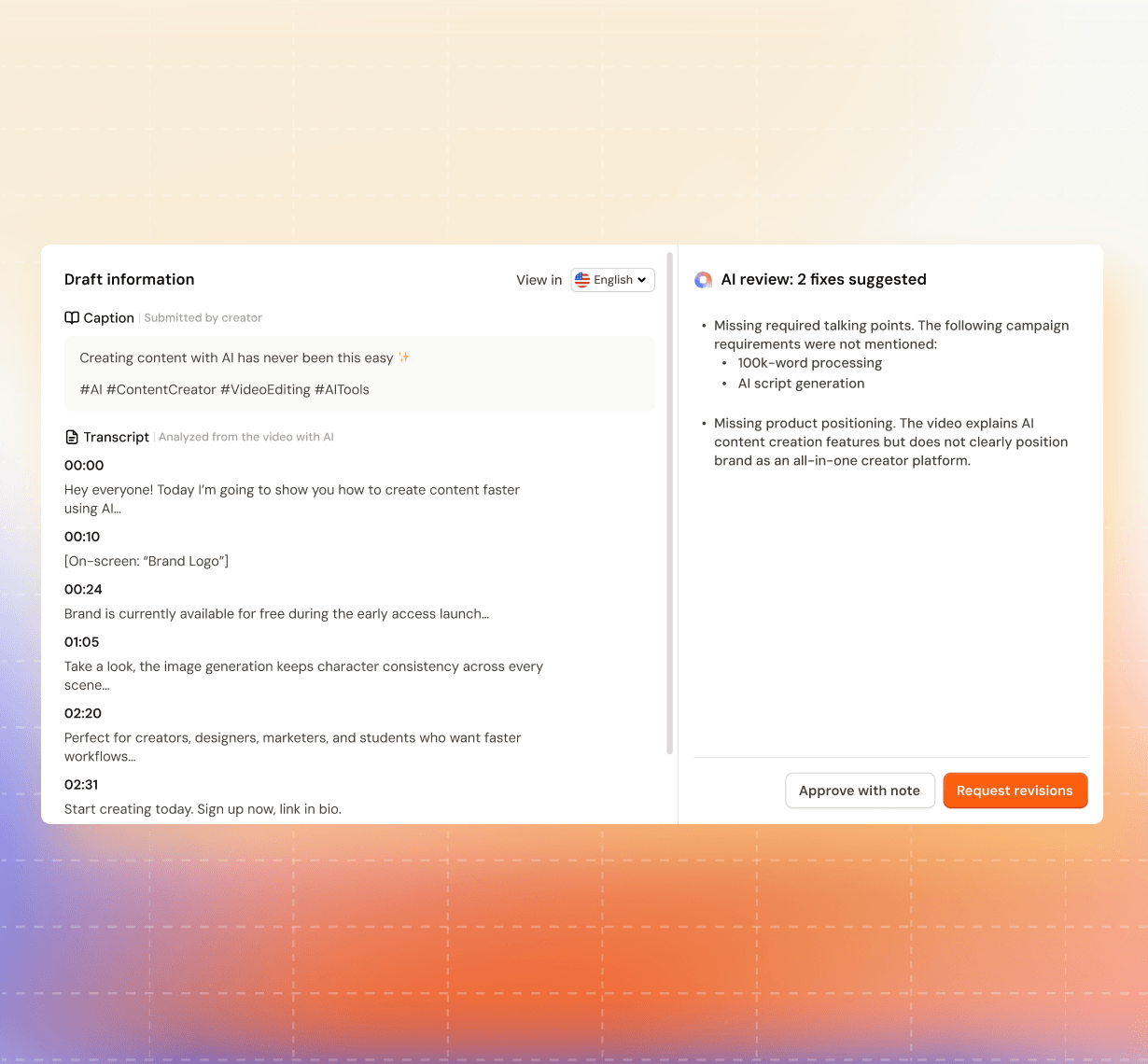
Bring outreach, negotiation, contracts, content review, and campaign tracking together with AhaCreator. Pay creators through the platform and explore how AI supports your team at each stage of a collaboration.
Frequently asked questions
Questions, answered
What is an influencer-sponsored post?
It is content a creator publishes to their own audience in exchange for money, free products or services, or another commercial benefit from a brand. It normally combines the creator’s voice and channel with a brand, product, service, or promotional message.
What is a Sponsored Post? · How to Create the Perfect Sponsored Post - Intellifluence · What Is a Sponsored Post? Definition, Examples, and FTC Rules
Is a sponsored post the same as influencer marketing?
No. Influencer marketing is the broader category of brand–creator relationships. Sponsored posts are one possible output alongside affiliate relationships, ambassadorships, events, creator-produced assets, and content licensing.
What is a Sponsored Post? · What Is a Sponsored Post? Definition, Examples, and FTC Rules
Is creator-produced UGC an influencer-sponsored post?
Not necessarily. Creator-produced UGC may be delivered directly to a brand without being published to the creator’s audience. It becomes a sponsored creator post when the agreed deliverable includes compensated publication on the creator’s own channel; the brand may also negotiate separate reuse rights.
What Is a Sponsored Post? Definition, Examples, and FTC Rules
Does paying a creator mean the brand owns the content?
No ownership or unlimited usage rights should be assumed from payment alone. The parties should specify whether the brand may repost, edit, crop, license, or place the content in paid advertising, as well as the applicable channels, territories, and time periods.
What Is a Sponsored Post? Definition, Examples, and FTC Rules · Collabstr | Influencer Marketing Made Easy
How is an influencer-sponsored post different from a promoted or boosted post?
In a sponsored creator post, the brand compensates the creator to publish content to the creator’s audience. In a promoted or boosted placement, the advertiser pays the platform to expand distribution. A sponsored post can later be amplified, but the paid-media setup and required permissions are separate terms.
What is a Sponsored Post? · What Is a Sponsored Post? Definition, Examples, and FTC Rules
How can you recognize a sponsored influencer post?
Common formats include images, carousels, short or long videos, stories, tutorials, demonstrations, livestreams, and podcast segments. Look for a clear statement that the brand sponsored the content, a conspicuous #ad or #sponsored label, or a platform-native paid-partnership notice. Brand tags or discount codes can be clues, but they do not establish or adequately disclose a partnership by themselves.
What is a Sponsored Post? · How to Create the Perfect Sponsored Post - Intellifluence · What Is a Sponsored Post? Definition, Examples, and FTC Rules
Is a platform “Sponsored” label the same as an influencer partnership disclosure?
Not always. A platform “Sponsored” label often identifies a paid placement distributed through the platform’s advertising system. An influencer partnership disclosure identifies the commercial connection between the creator and brand. If a sponsored creator post is also amplified as an ad, both types of signals may appear.
What is a Sponsored Post? · What Is a Sponsored Post? Definition, Examples, and FTC Rules
What disclosure considerations apply to US influencer-sponsored posts?
For US-oriented planning, a material connection such as payment, free products or services, or another benefit should be disclosed clearly and prominently with the content. Brands should specify the disclosure, assign someone to check it, and verify current FTC, platform, format, audience, and other applicable requirements for the campaign. Vague or buried labels should not be treated as sufficient. This is operational information, not legal advice.
How to Create the Perfect Sponsored Post - Intellifluence · What Is a Sponsored Post? Definition, Examples, and FTC Rules
Define the Promotion Before Building the Campaign
Write down the asset, publisher, compensation, distribution method, approval process, and usage rights. Once the arrangement is clear, move to the appropriate creator-sourcing, collaboration, or campaign-execution workflow.
- Build a Campaign-Ready Creator Shortlist
- Set Up the Creator Collaboration
- Plan the Full Influencer Marketing Campaign
Sources
- What is a Sponsored Post?Used for article body, quick answer, decision rule
- How to Create the Perfect Sponsored Post - IntellifluenceUsed for article body, quick answer, decision rule
- What Is a Sponsored Post? Definition, Examples, and FTC RulesUsed for article body, quick answer, decision rule
- Collabstr | Influencer Marketing Made EasyUsed for article body