The best influencer marketing platform is not necessarily the one with the largest creator database or longest feature list. It is the platform that removes the most important constraint in your program—whether that is finding creators, hiring them efficiently, coordinating campaigns, attributing sales, or handling payments.
This guide helps US brand teams, founders, ecommerce marketers, and agencies define their requirements and build a defensible shortlist. Based on the directly reviewed vendor information, Upfluence is a strong candidate for ecommerce and affiliate-linked programs, while Collabstr is a strong candidate for marketplace-based creator hiring and transparent pre-hire rates. These are fit recommendations, not a universal ranking. Exact pricing, product behavior, creator coverage, and integrations should be verified in a current demo and proposal.
Quick answer
For ecommerce and affiliate-linked creator programs, shortlist Upfluence because it states that it connects creator discovery and campaign management with store integrations, promotional codes, sales attribution, ROI reporting, and payments. For marketplace-based hiring and lean-team workflows, shortlist Collabstr because it states that brands can search creators, see quoted rates, negotiate deliverables, approve content, pay securely, and review performance in one workflow. Treat these as fit-based candidates—not a universal first- and second-place ranking.
Decision rule
Choose according to the workflow that must work end to end, then reject any platform that fails a mandatory integration, creator-market, payment, data, permission, or reporting requirement.
- When Revenue attribution, affiliate commissions, store integrations, and creator payments are central requirements
- Shortlist Upfluence and require a demo using your actual commerce and attribution scenario.
- When The team wants a searchable creator marketplace, visible quoted rates, direct negotiation, approvals, and payment in one workflow
- Shortlist Collabstr and test relevant creator supply plus the full order and approval process.
- When The team wants to consolidate creator operations but has not chosen a sourcing model
- Evaluate both platforms using identical briefs, workflow scenarios, permission tests, reports, and total-cost assumptions.
- When Neither platform demonstrates a mandatory capability
- Do not let an overall score override the gap; research another vendor or combine focused tools.
Comparison
| Criterion | Upfluence | Collabstr |
|---|---|---|
| Best-fit context | Ecommerce and affiliate-linked creator programs requiring commerce tracking and broader campaign operations | Marketplace-based creator hiring and lean workflows from search through approval and payment |
| Creator sourcing | Database-style discovery, customer-based creator identification, automated outreach, and marketplace applications are described | Searchable marketplace by platform, niche, audience, and budget, plus campaign briefs and matched creators |
| Pre-hire pricing visibility | Creator-rate transparency before hiring is not established by the reviewed page | Quoted creator rates before hiring and direct negotiation are stated |
| Campaign workflow | Outreach, hiring, relationship management, draft visibility, tracking, and payment are described | Briefs, negotiation, orders, communication, approvals, reporting, and payments are described |
| Commerce and affiliate capabilities | Promo codes, affiliate tracking, commissions, store connections, Amazon Attribution, sales, and ROI reporting are described | ROI reporting is described, but equivalent store integrations and detailed affiliate functionality are not established by the reviewed page |
| Payments | Worldwide payments, multiple currencies, KYC, document collection, PayPal, and Upfluence Pay are described | Escrow until approval, automated payouts, and tax forms for creators in 150 countries are described |
| Team and creator records | Creator relationship management and consolidated campaign records are described | Shared team workspace, approval routing, creator CRM, and importing external creators are described |
| Pricing evidence | No exact plan price is established; the vendor says pricing commonly depends on program size, features, and service needs | Free search and free-to-start claims are stated; complete paid-program and transaction costs are not established |
Best Influencer Marketing Platforms: Quick Fit Guide
For the two platforms directly verified for this guide:
- Upfluence is the stronger candidate for ecommerce and affiliate-linked creator programs. Its stated capabilities include creator discovery, campaign management, promo-code generation, affiliate tracking, creator payments, ROI reporting, and integrations with commerce and marketing systems.
- Collabstr is the stronger candidate for marketplace-based creator hiring and lean workflows. It states that brands can search creators, review audience information and quoted rates, create briefs, negotiate deliverables, approve content, pay creators, collaborate as a team, and review campaign reporting in one system.
Neither recommendation establishes that a platform is best for every brand. Teams focused on specialized social listening, earned-media analysis, narrow regional creator coverage, or other requirements not addressed by the reviewed materials will need additional vendor research.
Influencer Marketing Platform | Upfluence · Collabstr | Influencer Marketing Made Easy
What an Influencer Marketing Platform Should Cover
Influencer marketing platforms can consolidate several activities that brands otherwise manage through spreadsheets, email, analytics products, payment services, and social-platform interfaces. Common functions include:
- Creator discovery and filtering
- Outreach or marketplace applications
- Brief and deliverable management
- Creator relationship records
- Content submission and approval
- Tracking links, codes, or campaign analytics
- Team collaboration and permissions
- Creator payments and administrative records
The category is broad. Some products lead with creator discovery, while others act as hiring marketplaces or end-to-end operating systems. Commerce-oriented products may connect creator activity to orders and revenue. A platform should not be assumed to support every function merely because it uses an “all-in-one” label; each required workflow must be demonstrated.
Influencer Marketing Platform | Upfluence · Collabstr | Influencer Marketing Made Easy
Start With the Workflow You Need to Improve
Define the primary job before booking demos. Most buying decisions begin with one of these needs:
Discovery-led tools
Choose this category when the principal problem is finding relevant creators across required channels, markets, languages, niches, or audience profiles. Evaluate the relevance and freshness of actual results rather than accepting a headline database count.
Direct-hiring marketplaces
A marketplace is useful when the team wants creators who are available for paid work, visible rates or quotes, and a shorter path from search to order. Confirm how creators are vetted, what costs are displayed, how negotiation works, and whether usage rights and revisions can be recorded.
End-to-end creator-program systems
Consider a broader system when discovery, outreach, campaign stages, approvals, relationship history, reporting, and payments must share one operational record. These systems can reduce handoffs, but they also require clearer ownership, configuration, and implementation.
Ecommerce and affiliate-oriented platforms
Prioritize this category when creator links, promotional codes, commissions, transactions, and revenue attribution are central to the program. Store compatibility and attribution logic become must-have requirements rather than optional features.
Analytics, payment, or other point solutions
A full platform may be unnecessary if the existing workflow works well except for one function. A specialized analytics, payment, or discovery product can be more practical than replacing the entire operating stack.
If your needs span several categories, decide whether one platform must cover all of them or whether a connected stack is acceptable. The related guide to choosing an influencer marketing tool stack offers a broader architecture perspective.
Platform Evaluation Criteria for Brand Teams
Create a weighted scorecard before vendor demonstrations. Give greater weight to the workflow and business outcome that justify the purchase.
1. Creator coverage and data quality
Test coverage in your required social channels, markets, languages, niches, audience segments, and creator tiers. Ask when important fields were refreshed and whether values are observed, estimated, creator-supplied, or imported.
2. Sourcing model
Determine whether the product supports outbound discovery, inbound applications, marketplace ordering, importing existing relationships, or a combination. Confirm whether creators are actually contactable through the proposed workflow.
3. Campaign and content workflow
Test briefs, assignments, deadlines, submissions, revisions, approvals, usage-rights records, and exceptions. A polished dashboard does not compensate for missing steps that employees must continue managing elsewhere.
4. Creator CRM and collaboration
Check ownership fields, lifecycle stages, notes, conversation history, duplicate handling, role permissions, and approval routing. Agencies should also test client separation and cross-account visibility.
5. Reporting and attribution
Require reports that match the program's KPIs. Examine creator-, content-, campaign-, and program-level reporting where needed. Ask how clicks, conversions, revenue, commissions, and ROI are defined and how delayed or missing data is handled.
6. Integrations and data access
List mandatory commerce, email, analytics, finance, and identity systems. Verify whether each connection is native, partner-built, API-based, file-based, or manual. Test the fields exchanged, synchronization direction, frequency, historical backfill, and export access.
7. Payments and compliance support
Confirm supported creator locations, currencies, payment methods, approval controls, tax-document processes, reconciliation records, and division of responsibility. “Global payments” should be translated into the exact countries and cases your program requires.
8. Pricing and total operating cost
Include subscription fees, marketplace or transaction charges, required modules, implementation, migration, integrations, training, support, and retained manual work. Do not compare sticker prices without confirming what each proposal includes.
9. Implementation effort and usability
Have daily users, approvers, analysts, finance participants, and administrators complete representative tasks. Estimate the internal ownership and process changes required after purchase.
Use a simple 1-to-5 rating for each weighted criterion, but treat must-have failures separately. A high overall score should never override a mandatory integration, permission, data, or compliance gap.
Best Platforms by Brand Context
Ecommerce and DTC programs needing sales attribution
Shortlist Upfluence. Its vendor materials describe store and marketing-stack integrations, promotional codes, creator-level links, affiliate tracking, commission information, payments, and dashboards that include revenue and ROI. This makes it a relevant candidate when creators are expected to produce measurable commerce results.
Lean teams wanting marketplace-based hiring
Shortlist Collabstr. Its stated workflow covers creator search, visible quoted rates, campaign briefs, direct negotiation, content approval, payment, and reporting. That may reduce the number of separate tools required to place and manage creator orders.
Teams consolidating campaign operations
Evaluate both, then test the operating model. Both vendors present multi-stage workflows, but their sourcing emphasis differs. Upfluence combines database-style discovery, marketplace applications, relationship management, commerce tracking, and payments. Collabstr emphasizes searchable marketplace inventory, orders, briefs, approvals, payments, reporting, and a shared team workspace.
Brands that need creator price visibility before hiring
Shortlist Collabstr. Its vendor page states that brands can see quoted rates before hiring and negotiate directly with creators. Confirm which fees are visible, what is negotiable, and whether usage rights or add-ons change the final cost.
Programs with specialized requirements
Additional research is required for needs such as narrow regional inventory, specialized brand-safety analysis, advanced social listening, earned-media measurement, or platform-specific capabilities not established by the reviewed sources. Brands focused specifically on smaller creators can also use the micro-influencer platform comparison framework.
Influencer Marketing Platform | Upfluence · Collabstr | Influencer Marketing Made Easy
Upfluence: Best Fit for Ecommerce and Affiliate-Linked Creator Programs
Upfluence presents itself as an influencer marketing system connecting discovery and campaign operations with ecommerce performance. Its stated capabilities include creator search, marketplace applications, automated outreach, relationship management, content-draft visibility, sales tracking, promo-code generation, affiliate commissions, creator payments, and custom reporting dashboards.
The vendor specifically names Shopify, WooCommerce, Magento, BigCommerce, and Amazon in connection with store-compatible promotional codes. It also describes Amazon Attribution and payment integration, connections involving Shopify and Klaviyo, individual tracking links, and reporting for clicks, views, sales, average order value, commissions, and ROI.
Payment capabilities described by Upfluence include PayPal or Upfluence Pay, multiple currencies, KYC verification, and document collection. These features could be valuable for programs paying many creators, but buyers should verify the countries, currencies, tax workflows, legal responsibilities, approval controls, and payment costs applicable to their organization.
Validate in the demo:
- Run creator searches using your real audience, channel, geography, and niche requirements.
- Connect or simulate your actual store and trace a test order from creator link or code to the final report.
- Review attribution windows, exclusions, returns, discount handling, and cross-device limitations.
- Import an existing creator and inspect how relationship history and identifiers are retained.
- Process a representative payment scenario involving finance approval and required documentation.
- Confirm which integrations, AI functions, payment capabilities, reports, users, and services are included in the proposed plan.
Claims about time savings, creator response rates, ROI, or customer outcomes on a vendor page should be treated as vendor-reported examples—not guaranteed results for another brand.
Collabstr: Best Fit for Marketplace-Based Creator Hiring and Lean-Team Workflows
Collabstr presents a marketplace-led workflow extending from creator search through payment and reporting. The vendor states that brands can search creators by platform, niche, audience, and budget; review engagement and demographic information; publish campaign briefs; receive matched creators; and see quoted rates before hiring.
The stated ordering workflow supports direct negotiation, deliverable and usage-rights alignment, centralized communication, and content approval. Collabstr says funds remain in escrow until content is approved, after which payouts and tax forms are handled for creators in 150 countries. Its page also describes post-level reporting, team workspaces, a creator CRM, and the ability to invite creators sourced outside its marketplace.
This model may suit founders and lean marketing teams that want to move from search to a defined creator order without constructing a large outbound operation. The tradeoff is that marketplace availability must match the brand's real creator needs; the headline inventory count alone does not establish relevant supply.
Validate in the demo or trial:
- Search for creators using several real briefs and mandatory audience filters.
- Inspect profile data definitions, freshness, verification methods, and missing-field behavior.
- Confirm what quoted rates include and how revisions, usage rights, exclusivity, and additional deliverables affect cost.
- Test negotiation, approvals, cancellations, disputes, refunds, and late-delivery scenarios.
- Review payment coverage for the countries and entities relevant to your program.
- Verify how ROI is calculated and whether the required raw or detailed data can be exported.
- Confirm software, transaction, payment, or service fees in the current proposal.
The vendor states that searching and getting started can be free, but the reviewed material does not establish the complete cost of operating a paid program.
When a Platform Is Not the Right First Purchase
An influencer marketing platform may not be the best first purchase when:
- Campaigns are infrequent and a documented spreadsheet-based workflow remains manageable.
- No one owns creator relationships, approvals, reporting, or platform administration.
- The team has not defined its target creators, deliverables, KPIs, or attribution approach.
- Existing data is too inconsistent to migrate or match across systems.
- One narrow problem—such as payments or discovery—is the only meaningful constraint.
- The expected campaign volume does not justify implementation and subscription overhead.
- Native social-platform tools already cover the immediate, limited use case.
Start with a lightweight process when the program is still experimental. Document creator records, campaign stages, approvals, tracking methods, payment status, and reporting requirements. Reconsider a platform when manual coordination creates recurring delays, weakens controls, fragments data, or prevents the team from measuring the program consistently.
How to Validate a Shortlist Before You Buy
Use the same evaluation process for every finalist:
- Document the use case. State the workflow problem, expected outcome, users, program volume, required channels, creator markets, and systems involved.
- Set must-haves and disqualifiers. Missing mandatory integrations, markets, permissions, exports, payment coverage, or data fields should be treated separately from scored preferences.
- Run representative creator searches. Use identical briefs and filters, then inspect result quality rather than database totals.
- Conduct scenario-based demos. Ask vendors to find a creator, import an existing relationship, create a brief, route an approval, generate a tracking mechanism, display results, export records, and change permissions.
- Test integrations and data. Trace representative records through required systems and confirm which fields move, in which direction, and how often.
- Examine measurement logic. Request definitions for metrics, attribution windows, exclusions, latency, returns, and incomplete data.
- Confirm payment responsibility. Map approvals, creator onboarding, tax documents, currency handling, payment status, reconciliation, and exceptions.
- Model total cost. Include every required module, service, fee, implementation task, and manual process that remains outside the platform.
- Separate current capabilities from promises. Record whether each requirement was demonstrated, documented, offered as custom work, or described as a roadmap item.
- Document the decision. Record scores, disqualifiers, assumptions, risks, owners, selected configuration, contract commitments, and a future review date.
Where possible, run a limited pilot before a long commitment. A pilot should use real users, representative creators, required integrations, and an agreed report—not an isolated product tour.
Common Mistakes When Choosing an Influencer Marketing Platform
- Choosing by database size alone: Total inventory does not prove that suitable, active, contactable creators exist in your target segment.
- Accepting vendor metrics as independent benchmarks: Vendor-reported time savings, ROI, and customer results may not transfer to your program.
- Comparing feature checklists without testing workflows: Two platforms can claim the same function while handling approvals, exceptions, or exports very differently.
- Ignoring creator sourcing preferences: A marketplace, outbound database, customer-recruitment model, and inbound application system solve different problems.
- Failing to test attribution: A dashboard labeled “ROI” does not reveal attribution windows, returns treatment, discount logic, or data gaps.
- Overlooking payments and compliance: Confirm responsibilities, supported locations, documentation, fees, approvals, and reconciliation instead of relying on a broad payments claim.
- Treating integrations as yes-or-no features: Verify the actual objects, fields, synchronization behavior, limits, and plan requirements.
- Buying more complexity than the team can operate: A broad platform creates little value without process ownership, clean records, training, and enough campaign volume.
- Letting a high score conceal a disqualifier: A missing mandatory capability should not be offset by unrelated strengths.
Implement the Selected Platform in a Controlled First Phase
Limit the first phase to the workflow that justified the purchase:
- Assign a business owner, administrator, data owner, and integration owner.
- Decide where creator identity, relationship history, campaign status, performance data, and payment status are authoritative.
- Standardize identifiers, required fields, lifecycle stages, naming conventions, and duplicate rules.
- Configure assignments, approvals, notifications, templates, permissions, and exception handling.
- Clean existing records before importing them, while retaining a recoverable original copy.
- Connect only the systems required for the initial use case.
- Document KPI definitions, attribution rules, source fields, reporting intervals, and report owners.
- Train administrators, daily users, reviewers, analysts, and finance participants according to their roles.
- Pilot one campaign or a limited creator cohort with a fallback process.
- Resolve workflow, data, permission, integration, and reporting issues before expanding.
Implementation is complete only when users can perform the intended workflow, required data moves correctly, responsibilities are clear, and stakeholders can reproduce the agreed report.
Conclusion
Choose an influencer marketing platform by starting with the workflow that needs improvement, not with a vendor leaderboard. Upfluence deserves consideration when commerce integrations, affiliate tracking, creator payments, and revenue attribution are central requirements. Collabstr deserves consideration when a team wants to search a marketplace, see quoted creator rates, negotiate deliverables, approve content, and release payment through one workflow.
Before signing, give every finalist the same creator searches and operating scenarios. Confirm required integrations, inspect reporting and attribution logic, test permissions and exports, and compare total operating cost. If no option passes every must-have requirement, keep the shortlist open or combine smaller tools rather than accepting a high-scoring platform with a critical gap.
AhaCreator
From creator matching to payment. One connected workflow.
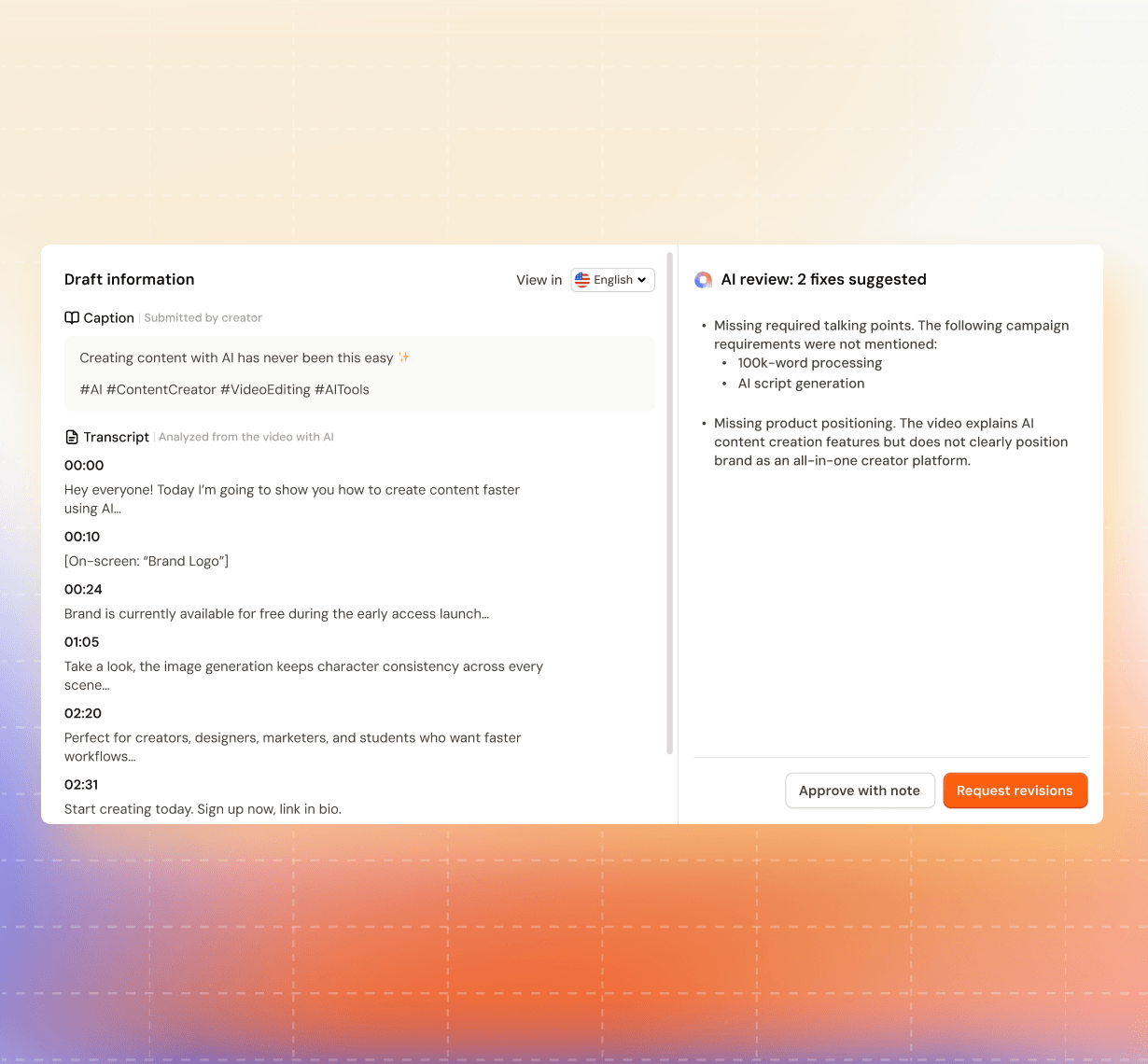
Bring outreach, negotiation, contracts, content review, and campaign tracking together with AhaCreator. Pay creators through the platform and explore how AI supports your team at each stage of a collaboration.
Frequently asked questions
Questions, answered
What is the best influencer marketing platform?
There is no verified universal winner. Upfluence is a strong candidate for ecommerce and affiliate-linked programs requiring store integrations, sales attribution, campaign management, and creator payments. Collabstr is a strong candidate for marketplace hiring with visible quoted rates, direct negotiation, approvals, payments, and reporting. The better option depends on your primary workflow and must-have requirements.
Influencer Marketing Platform | Upfluence · Collabstr | Influencer Marketing Made Easy
What is the difference between an influencer marketing platform and an affiliate platform?
An influencer platform generally supports finding creators and managing content collaborations. An affiliate platform generally emphasizes tracked links, commissions, and sales-based payouts. The categories increasingly overlap: Upfluence, for example, states that brands can combine creator management with affiliate links, promotional codes, commerce attribution, commissions, and payments.
Do small businesses need an all-in-one influencer platform?
Not always. A small business running occasional campaigns may be able to use a documented spreadsheet, native social tools, and a focused payment or analytics solution. An all-in-one platform becomes more compelling when creator volume, approvals, payments, reporting, or coordination repeatedly exceed what a lightweight process can handle.
Is Upfluence or Collabstr better for ecommerce brands?
Upfluence presents the more commerce- and affiliate-oriented capability set in the reviewed materials, including store integrations, promotional codes, creator-level tracking, revenue reporting, commissions, and payments. Collabstr may still fit an ecommerce brand whose primary need is marketplace sourcing and creator-order management. Test your store, attribution, and reporting requirements before deciding.
Influencer Marketing Platform | Upfluence · Collabstr | Influencer Marketing Made Easy
Which platform offers creator rates before hiring?
Collabstr states that brands can see creators' quoted rates before hiring and negotiate deliverables directly. Buyers should still confirm what the quote includes and how usage rights, revisions, exclusivity, additional deliverables, and platform fees affect the final cost.
How much do influencer marketing platforms cost?
The available evidence does not establish directly comparable current prices. Upfluence says platform pricing commonly varies with program size, required features, and service needs. Collabstr states that brands can search and get started free, but its reviewed page does not establish the complete cost of a paid program. Request itemized proposals covering software, implementation, users, integrations, transactions, payments, support, and retained manual work.
Influencer Marketing Platform | Upfluence · Collabstr | Influencer Marketing Made Easy
What should a brand verify before signing a platform contract?
Verify relevant creator supply, data freshness, required workflow stages, user permissions, integrations, exports, attribution logic, payment coverage, tax-document responsibilities, implementation services, support, total cost, and contract terms. Require scenario-based demonstrations and record whether each capability is currently available, custom, or only planned.
Build and Test Your Platform Shortlist
Write down your primary workflow, five must-have requirements, and three disqualifiers. Then run Upfluence, Collabstr, or any additional finalist through the same creator searches, campaign scenarios, integration tests, and total-cost model before committing.
- Create the weighted scorecard
- Schedule scenario-based demos
- Run a limited pilot
Sources
- Influencer Marketing Platform | UpfluenceUsed for article body, quick answer, decision rule, comparison matrix
- Collabstr | Influencer Marketing Made EasyUsed for article body, quick answer, decision rule, comparison matrix