Influencer marketing platforms can help consumer brands find and assess creators, manage relationships and deliverables, produce UGC, administer product seeding or affiliate programs, process payments, and measure results. But platforms that all claim to be “end to end” may operate very differently. Some provide a searchable database, some invite creators to apply, some organize long-term ambassador communities, and others combine software with managed campaign support.
This guide helps US consumer-brand marketers build a defensible shortlist based on the program they intend to run. It compares credible options across DTC commerce, creator discovery, recurring partnerships, UGC production, enterprise analytics, integrated suites, and managed support. It is a fit comparison—not a universal ranking—and does not cover creator outreach tactics, contract negotiation, or the full campaign execution process. Because features, packaging, and prices change, finalists should be validated directly with each provider before purchase.
Quick answer
There is no universally best influencer marketing platform for every consumer brand. Build a fit-based shortlist: consider GRIN for DTC ambassador relationships and product seeding; Upfluence for high-volume ecommerce and affiliate workflows; Club for DTC or ecommerce brands running recruited, mission-based micro-influencer or ambassador communities; Aspire for creator communities and ongoing partnerships; Modash for discovery, vetting, and Shopify-oriented operations; Sprout Social or Meltwater when influencer work must connect with a broader social or consumer-intelligence stack; CreatorIQ for global enterprise programs; Insense for UGC and paid-social creative; Collabstr for marketplace-based hiring with visible creator fees; and Later Influence, TRIBE, Aspire services, or a specialist agency when hands-on support matters. Treat these as candidates, not a ranking. Before purchasing, verify creator availability in your markets, supported channels, integrations, content-rights controls, payment workflow, reporting definitions, implementation effort, current pricing, and contract terms through a representative search and pilot.
Decision rule
Select the lowest-complexity option that clears every mandatory requirement and has sufficient verified evidence for the primary use case.
- When One platform clears all mandatory gates and handles the core workflow without material workarounds
- Choose the single platform, subject to successful validation and acceptable contract terms.
- When No single platform is strong enough across essential discovery, workflow, commerce, or data requirements
- Combine specialist tools only if integrations, ownership, support, and total operating cost remain manageable.
- When The required workflow is unusual and internal systems can support it reliably
- Configure an internal process or build selected components, including maintenance and staff-dependency costs in the decision.
- When Campaign volume is low, requirements remain unstable, or no owner can implement the system
- Continue with a controlled manual process and reassess after the operating model becomes clearer.
- When A platform fails a mandatory creator-coverage, security, data, integration, contractual, or budget requirement
- Remove it from consideration regardless of its total weighted score.
Comparison
| Criterion | Creator marketplace | Discovery database | Managed network | Campaign-management system | Affiliate or commerce tool | Combined stack |
|---|---|---|---|---|---|---|
| Primary job | Connect brands with creators participating in a structured marketplace | Search and evaluate creator profiles | Provide creator access plus human campaign support | Coordinate creator records, briefs, approvals, and campaign status | Support links, codes, commissions, products, or commerce records | Join specialist tools around the brand’s existing systems |
| Best fit | Teams seeking a structured application or transaction process | Teams whose main gap is creator discovery and vetting | Teams with limited internal sourcing or campaign capacity | Recurring programs with multiple creators and stakeholders | Performance-oriented creator or affiliate programs | Teams with strong existing systems and distinct specialist needs |
| Main validation question | Does the enrolled creator community match the brief? | Are relevant profiles current, understandable, and actionable? | Which responsibilities and relationships remain with the brand? | Does the workflow reflect real roles, approvals, and exceptions? | Does commerce tracking connect to the rest of the creator workflow? | Can the team manage integrations, identifiers, handoffs, and vendors? |
| Potential limitation | Supply and process may be limited to marketplace participation | May not provide full outreach or campaign operations | May provide less direct control or data portability | Strong workflow does not guarantee relevant creator discovery | May lack deep discovery, relationship, or content workflow | Adds implementation, governance, support, and data complexity |
| Evidence to request | Representative searches, active creator samples, process demonstration, and terms | Live searches, field definitions, refresh information, sample exports, and workflow test | Responsibility matrix, service scope, data access, creator relationship terms, and references where available | End-to-end scenario, permission test, import/export sample, and user acceptance results | Field-level integration test, attribution definitions, reconciliation process, and fee structure | Architecture map, field mappings, system-of-record rules, support ownership, and total cost |
Micro-Influencer Platforms: What They Help Brands Decide
A micro-influencer platform is not one standardized product category. The term may describe a creator marketplace, a searchable discovery database, a managed creator network, campaign-management software, an affiliate or creator-commerce tool, or a system combining several of these functions.
Brands should therefore define “micro-influencer” operationally for their own program. Instead of relying only on a universal follower threshold, describe the creators you need through audience relevance, channel, geography, language, content category, typical reach, format, and commercial model. This prevents a vendor from appearing suitable merely because it labels part of its network “micro.”
The selection process is complete when the team can defend one of three outcomes:
- Select a platform that clears all mandatory requirements.
- Use a combination of tools because no single product adequately covers the workflow.
- Delay procurement because current volume and complexity do not justify another system.
This page focuses specifically on micro-influencer discovery and campaign-management needs. Teams making a broader technology decision can also use the influencer marketing stack selection guide.
Define the Requirements Before You Compare Platforms
Write a short requirements brief before scheduling demonstrations. Separate mandatory capabilities from preferences so visually impressive features do not distract from the core use case.
Program and audience requirements
Document:
- The business purpose of the micro-influencer program
- Target customer markets, languages, interests, and relevant audience characteristics
- Required social channels, content formats, and campaign types
- Target creator categories, locations, audience sizes, and brand-fit characteristics
- Expected number of campaigns and creators handled at the same time
- Whether creators must come from an existing network or may be discovered across public profiles
Do not assume that a platform’s total creator count indicates useful supply. The relevant question is how many suitable, reachable, and currently active creators match your specific brief.
Workflow requirements
Map the process from creator discovery through campaign closeout. Identify who owns sourcing, vetting, outreach, negotiation, briefing, content review, approvals, payment, rights records, and reporting. Then mark which stages the new platform must support and which will remain in existing systems.
For each stage, record the current problem. Examples include duplicate outreach, missing creator history, slow approvals, fragmented rights records, manual payment reconciliation, or limited data exports. A requirement should solve a defined problem rather than merely request a feature.
Organizational constraints
Include required user roles, approvers, security review, data-retention expectations, procurement rules, budget limits, implementation capacity, and rollout timing. Also identify the systems that must remain authoritative for customer, campaign, financial, affiliate, or analytics data.
The result should be a one-page brief containing the primary use case, mandatory requirements, desired capabilities, expected usage, integration dependencies, budget assumptions, and decision owners.
Match Leading Platforms to Your Consumer-Brand Workflow
Platform categories overlap, so classify each option by the job it performs best—not by an “all-in-one” label. The shortlist below is organized by practical consumer-brand use case. It is not an objective ranking, and several supporting comparisons are vendor-authored; use the claims to identify candidates and questions for a demo, not as proof that one vendor will outperform another.
Platform comparison at a glance
| Platform | Strong starting fit | Operating emphasis | Important validation point |
|---|---|---|---|
| GRIN | DTC ambassador and recurring creator programs | Relationship management, gifting, product seeding, payments, and ecommerce workflows | Confirm creator limits, discovery depth, integrations, and the resources needed to operate the program |
| Upfluence | High-volume ecommerce, affiliate, and product-seeding programs | Creator discovery, outreach, commerce integrations, invoicing, promo codes, and attribution | Test ease of use, customer-data handling, plan scope, and whether the platform is excessive for current volume |
| Aspire | Long-term creator communities, UGC, and brands that may need services | Marketplace and outbound sourcing, content management, affiliate tools, paid-content reuse, and optional agency help | Verify creator supply by market, regional data coverage, rights workflow, and the exact division between software and services |
| Modash | Discovery, vetting, and Shopify-oriented creator operations | Public-profile search and audience analysis, with campaign, outreach, tracking, payment, and Shopify capabilities described by the provider | Confirm which management functions are available in the proposed package; third-party descriptions do not always agree on whether it is primarily discovery or an end-to-end system |
| Sprout Social Influencer Marketing | Teams that want influencer operations connected to a broader social stack | Discovery, brand-fit and safety checks, creator recruitment, campaign management, and reporting | Confirm package boundaries, payment and contracting functions, channel coverage, and the value of the wider suite to your team |
| Meltwater | Consumer-intelligence and social-listening-oriented organizations | Discovery, analysis, communication, monitoring, and campaign management within a broader intelligence suite | Determine whether the broader suite is required and test influencer data and workflow depth in your target markets |
| CreatorIQ | Global enterprises with dedicated creator-marketing teams | Program-level CRM, contracting, approvals, payments, integrations, attribution, and cross-region reporting | Validate implementation effort, required headcount, integrations, governance, and enterprise commercial terms |
| Insense | Performance teams sourcing UGC and creator content for paid social | Application-based sourcing and production of content intended for organic posts or paid-ad workflows | Review creator availability, revision and approval controls, rights language, ad-account workflow, and total project fees |
| Skeepers | Brands combining influencer activity with reviews, consumer video, or other UGC programs | Vetted nano- and micro-creator access within a wider consumer-marketing suite | Decide whether the suite’s breadth is valuable or whether a more specialized platform would be easier to operate |
| Collabstr | Brands wanting a marketplace with visible creator offers and a transaction workflow | Creator search, campaign briefs, negotiation, approvals, escrow-style payment, reporting, and creator CRM | Confirm creator depth in priority niches, marketplace and plan fees, analytics access, usage-rights handling, and current availability |
| Later Influence | Mid-size teams seeking structured onboarding or managed support | Influencer software with support layered onto sourcing and campaign operations | Clarify what the brand still owns, which services are included, and whether data and creator relationships remain portable |
| TRIBE | Brands that prefer an opt-in creator community plus human support | Creator community access, UGC, approvals, legal workflows, payments, measurement, and customer-success support | Verify US creator inventory, supported channels, service responsibilities, data portability, and commercial terms |
DTC commerce and ambassador programs: GRIN or Upfluence
GRIN is a logical candidate when a consumer brand wants to manage ongoing creator or ambassador relationships rather than buy isolated posts. Documented capabilities include creator discovery, gifting and product seeding, relationship management, campaign reporting, and payments. Available comparisons also position it around recurring ecommerce collaborations. It is less compelling if the brand has no community to develop, lacks an owner for creator relationships, or only needs occasional discovery.
Upfluence is positioned for higher-volume programs involving discovery, outreach, product seeding, promo codes, invoicing, affiliate activity, and ecommerce data. One reported differentiator is the ability to identify influential people within an existing Shopify or WooCommerce customer base. That can be useful for consumer brands that want to turn customers into partners, but teams should test the learning curve and avoid buying enterprise depth they will not use.
For both options, run a realistic workflow during the demo: identify creators, send a product, issue a code or link, approve content, attribute an order, and process compensation. Confirm how returns, code leakage, multi-touch attribution, creator taxes, and rights are handled rather than assuming an ecommerce integration resolves every operational issue.
Community, recurring content, and flexible support: Aspire
Aspire is a strong candidate for brands building creator communities and long-term partnerships. Sources describe a combination of creator discovery, a marketplace or application layer, campaign organization, content management, affiliate capabilities, and paid-content reuse. Aspire also offers agency support, making it relevant when a brand wants software but may need help with discovery, seasonal capacity, or end-to-end delivery.
That flexibility requires a clear scope. Ask whether the proposed engagement is software-only, assisted implementation, or a managed campaign. Validate creator availability by geography and niche, supported channels, content-rights controls, affiliate attribution, and which tasks remain with the internal team.
Discovery and vetting: Modash and specialist analytics tools
Choose a discovery-led platform when the central problem is identifying and evaluating creators—not outsourcing campaign execution. Modash supports public-profile search and audience analysis across major creator networks. Its own materials also describe inbox-based outreach, content tracking, campaign measurement, creator payments, Shopify integration, and support for gifting, affiliate, and sponsored campaigns.
However, platform descriptions differ: one comparison characterizes Modash mainly as discovery and vetting, while the provider describes a broader operating suite. Buyers should resolve that discrepancy against the current product and package. Test audience filters, fake-follower signals, profile freshness, historical sponsored content, exports, story tracking, outreach, payments, and Shopify data flows.
A specialist analytics product such as HypeAuditor may be useful when audience authenticity, fraud signals, or account vetting is the primary need. It should not be assumed to replace briefing, approvals, contracting, relationship management, or payment. A combined stack is defensible when the specialist analysis is materially better and the team already has reliable systems for the remaining work.
Broader social and intelligence stacks: Sprout Social or Meltwater
Sprout Social Influencer Marketing fits teams that want creator discovery, brand-fit and safety evaluation, inbound recruitment, relationship management, execution, and reporting connected with a broader social media environment. This can reduce tool switching for an existing Sprout customer, but a brand that only needs influencer discovery may be paying for unnecessary suite breadth.
Meltwater is a relevant alternative for organizations that place consumer intelligence, social listening, and monitoring alongside influencer discovery and campaign management. Its influencer capabilities derive from Klear and are presented as part of the wider Meltwater suite. During evaluation, compare the quality of creator search and campaign workflows with the value of the listening and intelligence functions; do not select a broader suite unless those adjacent capabilities support a real internal requirement.
Enterprise scale and governance: CreatorIQ
CreatorIQ is positioned for global enterprises operating influencer marketing as an always-on channel across regions, brands, or business units. Its documented focus includes discovery, CRM, contracting, approvals, global payments, integrations, custom attribution, and program-level reporting.
This level of control can help organizations with formal governance and dedicated staff, but it can burden a smaller consumer brand. Ask for a realistic implementation plan, required internal roles, API and data-warehouse requirements, permission controls, regional payment coverage, support commitments, and a complete commercial proposal. Enterprise capability is only an advantage when the organization can implement and use it.
UGC and paid-social production: Insense or Skeepers
Insense uses an application-based model in which brands post briefs and creators apply. It is positioned around UGC and influencer content for Meta and TikTok advertising workflows. This makes it a practical candidate when the principal output is a repeatable supply of ad creative rather than a long-term ambassador CRM.
Skeepers combines influencer marketing with ratings, reviews, consumer video, and other consumer-marketing functions. It can suit brands seeking nano- or micro-creator content as part of a broader UGC and social-proof program. The trade-off is suite breadth: evaluate whether your team needs the adjacent modules and whether the influencer component independently meets your workflow requirements.
For either option, inspect the actual contract rather than relying on a general promise of “content rights.” Confirm permitted channels, paid-media use, editing, duration, territory, creator-handle advertising, renewal terms, and whether rights differ by creator or project.
Marketplace buying and transparent creator offers: Collabstr
Collabstr combines creator search with campaign briefs, direct negotiation, deliverable confirmation, content approval, payment, reporting, shared workspaces, and creator relationship management. Creators can respond to posted opportunities, while brands can also bring externally sourced creators into the workflow. The marketplace displays creator offers and fees before a brand commits, which may make early budget comparisons easier.
It is a useful candidate for teams that want to start without implementing a large enterprise system. Before choosing it, search for your actual US audience segments and product niches, inspect audience and engagement data, and confirm plan limits, marketplace fees, payment terms, tax handling, reporting access, and usage-rights controls.
Managed support: Later Influence, TRIBE, Aspire services, or an agency
Later Influence is positioned for mid-size brands seeking structured onboarding and managed support around an influencer platform. TRIBE combines an opt-in creator community and centralized workflow with customer-success and community-management assistance. Aspire can add agency services to its software. These hybrid models may suit a lean brand team that wants technology without owning every operational task.
A managed creator-marketing agency is a different purchase. For example, Influencer describes an end-to-end service covering creator shortlisting, contracting, content feedback, reporting, payments, production, amplification, and measurement through its operating system. That is closer to outsourced campaign delivery than to licensing standalone software.
Before comparing costs, document who will source creators, negotiate and contract, review content, manage revisions, process payments, monitor compliance, analyze performance, and retain the creator relationship. Also establish whether the brand can export campaign data and continue working with creators if the service ends.
Choose the operating model before the vendor
Use these rules to narrow the field:
- Choose an outreach-led database or suite when your team wants broad creator choice and can operate outbound recruitment.
- Choose an application-based marketplace when you want interested creators to respond to a brief and prefer a structured transaction flow.
- Choose a community or ambassador platform when repeated missions, gifting, commissions, and long-term relationships matter more than one-off sourcing.
- Choose a UGC-oriented platform when the main deliverable is reusable creative for brand or paid-media channels.
- Choose an enterprise suite when governance, integrations, global payments, attribution, and cross-team reporting justify the implementation burden.
- Choose a hybrid platform or managed service when internal capacity is the binding constraint, but define ownership and responsibilities before comparing proposals.
A combined stack can also work—for example, a specialist discovery or vetting tool connected to an existing CRM, affiliate system, project-management platform, analytics environment, and finance process. Keep that design only if the added capability outweighs duplicate records, integrations, handoffs, and administration.
Finally, give every finalist the same test. Ask it to find creators for a representative product, audience, channel, and US market; inspect the usable results; then walk through outreach or applications, briefing, approvals, rights, payment, commerce attribution, reporting, and export. Confirm current pricing, plan limits, creator supply, integrations, service scope, and contractual terms directly with the vendor before committing.
Top Influencer Marketing Platforms in 2026: How to Choose · Collabstr | Influencer Marketing Made Easy · TRIBE | Influencer Marketing Platform For Brands & Agencies · 9 Best Microinfluencer Platforms in 2026 · Micro-influencer programs · Top 16 Influencer Marketing Platforms for 2026 | Sprout Social · INFLUENCER: Global Influencer Marketing Agency
Club: DTC and E-commerce Ambassador Communities
Club is a conditional candidate for DTC and ecommerce brands that want to recruit and manage a repeat community of micro-influencers, customers, fans, or ambassadors—not simply source one-off creator collaborations. Club describes workflows for finding and recruiting micro-influencers, assigning missions and creative briefs, collecting posts, stories, videos, and other UGC for review, tracking performance, and automating rewards or commissions. Participants can use a branded portal to access missions, submit content, and track earnings.
This model may fit a brand whose program depends on repeated activations, community participation, affiliate activity, or creator-generated UGC over time. It is not automatically the right choice for a team that only needs broad public-profile discovery or occasional marketplace transactions.
Before selecting it, confirm how net-new members are sourced, the relevant social and commerce integrations, the definitions behind performance and attribution reporting, and the proposed handling of commercial terms, content rights, payments, tax obligations, and US-market requirements.
Evaluate Creator Discovery and Data Quality
Creator discovery should be tested with real briefs, not a generic vendor search. Give each vendor the same representative scenarios covering your priority channels, audience markets, languages, niches, creator characteristics, and exclusions.
Test relevant creator supply
Ask the vendor to run several searches while your team observes. Examine the number and quality of results after mandatory filters are applied. Review whether profiles are active, relevant, contactable through the proposed workflow, and appropriate for the brand.
Inspect a sample rather than relying on aggregate network claims. Include both expected creators and less obvious niche combinations. If the program depends on creators in a specific region or language, make that a separate pass-or-fail test.
Understand each data field
For important profile and audience fields, ask:
- Is the value observed, calculated, estimated, creator-supplied, or uploaded by the customer?
- When was it last refreshed?
- What does a blank value mean?
- How does channel or account authorization affect availability?
- Can users see definitions and limitations inside the product?
- Can the team export the field at the detail level it needs?
Do not treat an opaque score as conclusive. Fraud, authenticity, audience quality, engagement, and brand-safety signals should support human review, not replace inspection of the creator’s content, audience interaction, sponsorship history, and contextual fit.
Validate the search workflow
Test whether users can save searches, compare profiles, build lists, add review notes, record rejection reasons, avoid duplicate evaluations, and preserve decisions. Search quality includes repeatability and team coordination—not only the number of filters.
Named-platform coverage, pricing, integrations, and data-refresh practices can change. Verify these details directly in the current product, proposal, technical documentation, and contract rather than relying on an older comparison page.
Evaluate Workflow, Governance, and Team Fit
Ask vendors to demonstrate a normal campaign from beginning to end using your roles and exceptions. Avoid demonstrations that jump between polished screens without showing how records move through the workflow.
Creator relationship and campaign operations
Depending on your requirements, test whether the system can:
- Import existing creator records without losing identifiers or history
- Assign owners and prevent overlapping outreach
- Store communications, notes, rates, preferences, and relationship status
- Issue or record briefs, deliverables, deadlines, and campaign assignments
- Collect content and preserve feedback or revision history
- Route approvals to occasional stakeholders without excessive training
- Record payment status, usage permissions, exclusivity, and other operational terms
- Track creator and campaign status through customizable stages
- Export a usable record if the platform is later replaced
Not every platform needs to perform every function. What matters is that ownership remains clear when a task takes place outside the platform.
Permissions and governance
Check role-based access, administrative controls, audit history, approval authority, and handling of sensitive creator or campaign information. Determine whether agencies, regional teams, finance users, legal reviewers, and temporary collaborators can receive appropriate access without seeing unrelated records.
Document the authoritative location for briefs, approvals, rights, payment status, and final campaign records. If employees continue to use email, spreadsheets, or separate project-management tools, define which system wins when records conflict.
Usability under realistic conditions
Have frequent users, administrators, and occasional approvers complete their own tasks. Count the manual steps and handoffs required. A product may technically contain a feature while making it impractical for everyday use.
Check Integration, Cost, and Risk Fit
A platform should fit the surrounding marketing operation rather than create an isolated source of truth.
Integration and data requirements
List every required connection to ecommerce, affiliate, CRM, analytics, social, identity, finance, storage, or business-intelligence systems. For each integration, confirm:
- Whether it is native, partner-built, API-based, file-based, or manual
- Which objects and fields move in each direction
- Update frequency, expected delay, and error handling
- Identifier matching and duplicate-management rules
- Availability of APIs, webhooks, scheduled exports, and historical backfills
- Plan or usage restrictions that affect access
- Who builds, monitors, and repairs the connection
An integration logo is not sufficient evidence. Ask to see the specific workflow and data fields the brand needs.
Total operating cost
Compare more than the subscription price. Include required modules, user or seat limits, usage charges, creator or transaction fees, implementation, migration, custom integrations, training, support, security review, and internal administration. Estimate the work that remains outside the platform as well.
Use the same time horizon and assumptions for every vendor. Separate confirmed charges from estimates and unresolved items. Current pricing and packaging should be verified in the proposal and contract.
Risk and contractual checks
Review data ownership, permitted data use, confidentiality, security documentation, service availability commitments, support coverage, renewal mechanics, price-change terms, minimum commitments, termination rights, data export, and deletion procedures. Determine what happens to creator records, communication history, content, reports, and integration access after cancellation.
Compliance responsibilities do not disappear when software supports the workflow. Assign owners for creator disclosures, content review, rights, consent, payment administration, and any market-specific legal or policy checks. Obtain appropriate legal, privacy, security, and procurement review for the brand’s circumstances.
Use a Weighted Selection Scorecard
Create the scorecard before demonstrations and give every option the same scenarios. Begin with pass-or-fail gates for requirements that cannot be traded away, such as required geography, channel coverage, security approval, data export, or budget ceiling.
Only score platforms that clear every mandatory gate.
Example scoring method
- Assign weights totaling 100 across relevant categories.
- Rate each platform from 1 to 5 for each criterion.
- Multiply each rating by the criterion weight.
- Add the weighted results to create a comparable total.
- Record the evidence and confidence level behind every rating.
A sample category structure could include creator relevance and discovery, data quality, workflow fit, integrations and data access, usability and governance, implementation effort, total operating cost, and vendor or contractual risk. The weights should reflect the program rather than being distributed equally by default.
For example, a commerce-led program may place more weight on affiliate or ecommerce data movement, while a brand-awareness program may emphasize discovery relevance, content workflow, and permissions. These are weighting choices, not universal rules.
Score evidence, not promises
Label each score according to its evidence source: demonstrated, tested in a pilot, documented contractually, supplied in writing, or not yet verified. Reduce confidence where the conclusion depends on a roadmap statement, a staged demonstration, or an assumption.
The score should support judgment rather than automate it. Review whether a small numerical difference is meaningful, whether one platform carries a concentrated risk, and whether evaluators applied the rubric consistently. The final recommendation should state why the preferred option won, which weaknesses remain, and how those weaknesses will be managed.
Decide Whether to Buy One Platform, Combine Tools, or Wait
Choose one platform when it clears the mandatory gates, supports the primary workflow with limited workarounds, connects acceptably to required systems, and costs less to operate than a fragmented alternative.
Combine tools when specialist capabilities materially improve an important stage and the team can manage the resulting integrations, identifiers, handoffs, permissions, and support relationships. Define the system of record for each data type before approving a combined stack.
“Build” usually means configuring internal databases, CRM records, automations, dashboards, and project workflows rather than developing an entire creator-data platform. It can make sense when the brand has unusual internal processes, strong technical support, and reliable lawful access to the required data. Include maintenance, documentation, security, and staff-dependency risk in the comparison.
When not to add a platform
A new tool may be premature when campaign volume is low, the operating process is still changing, no one owns implementation, creator needs are highly bespoke, or the team has not identified a specific workflow problem. A controlled spreadsheet, shared database, or existing CRM may remain sufficient temporarily if access, version control, permissions, and record ownership are managed carefully.
Waiting is also preferable when no vendor can demonstrate relevant creator supply or satisfy mandatory data, security, integration, or contractual requirements. Procurement should not be used to compensate for an undefined program.
Validate the Choice Before Rollout
Whenever practical, test the preferred option with a limited pilot that resembles actual work. Use representative creator briefs, users, approval paths, records, and integrations rather than a simplified demonstration dataset.
Pre-commitment checklist
- Confirm relevant creator supply for priority markets, languages, niches, and channels.
- Compare a sample of platform profiles with the corresponding current creator accounts.
- Complete a normal search, shortlist, outreach handoff, brief, approval, and reporting workflow.
- Test user roles with administrators, operators, reviewers, and external partners where applicable.
- Import representative existing records and check identifiers, notes, and history.
- Validate required integrations, exports, APIs, or file transfers with actual fields.
- Measure remaining manual steps and assign their owners.
- Confirm implementation milestones, vendor responsibilities, internal staffing, training, and support.
- Reconcile the final proposal with the evaluated feature set and expected usage.
- Review renewal, termination, data-return, and deletion terms.
Define pilot acceptance criteria before the pilot starts. Examples include successful completion of required workflows, adequate relevant creator results, accurate data movement, acceptable user feedback, and resolution of critical security or contractual issues.
Convert unresolved items into named actions, deadlines, and owners. Do not treat a roadmap commitment as an available capability unless the decision explicitly accepts that dependency and the contract addresses it appropriately.
Common Micro-Influencer Platform Selection Mistakes
Avoid these common mistakes:
- Comparing advertised creator counts: Total records do not prove relevant, active, reachable creator supply in the brand’s niche and markets.
- Using an undefined meaning of “micro”: Specify the audience, channel, reach, geography, and content characteristics the program needs.
- Starting with demos instead of requirements: Vendor presentation order can distort priorities when the team has no pre-agreed rubric.
- Treating filters as proof of data quality: A filter is useful only if its underlying field is sufficiently complete, current, and understandable.
- Assuming authenticity scores remove the need for review: Automated signals should inform, not replace, contextual creator evaluation.
- Buying an all-in-one platform for one broken stage: Existing systems may already handle most of the workflow effectively.
- Ignoring users outside the marketing team: Legal, finance, procurement, analytics, IT, agencies, and occasional approvers can determine whether the process works.
- Accepting integration logos at face value: Verify objects, fields, direction, timing, plan restrictions, and support ownership.
- Comparing license prices instead of total cost: Migration, integrations, internal administration, services, and retained manual work can change the result.
- Skipping exit planning: Confirm data access and transition procedures before records become dependent on the platform.
- Confusing platform selection with creator selection: Choosing software does not establish that an individual creator is suitable or that campaign terms are complete.
A defensible selection process records requirements, evidence, assumptions, rejected alternatives, remaining risks, and the reason for the final decision.
Conclusion
The best influencer marketing platform for a consumer brand is the option that fits its primary operating model and clears its mandatory requirements—not the product with the longest feature list. Start by deciding whether the program is centered on DTC ambassadors, high-volume commerce, broad discovery and vetting, recurring UGC, paid-social creative, enterprise governance, integrated social intelligence, or outsourced execution. That decision should reduce the shortlist before feature comparisons begin.
Treat published creator counts, integrations, automation, pricing models, and “end-to-end” claims as items to verify. Require representative creator searches, an end-to-end workflow demonstration, sample reports, clear rights and data terms, and—where practical—a limited pilot. If no platform clears those tests, retain a controlled manual or combined workflow rather than forcing a purchase. Once the technology decision is made, build the campaign itself with a separate Instagram influencer marketing strategy.
Top Influencer Marketing Platforms in 2026: How to Choose · INFLUENCER: Global Influencer Marketing Agency
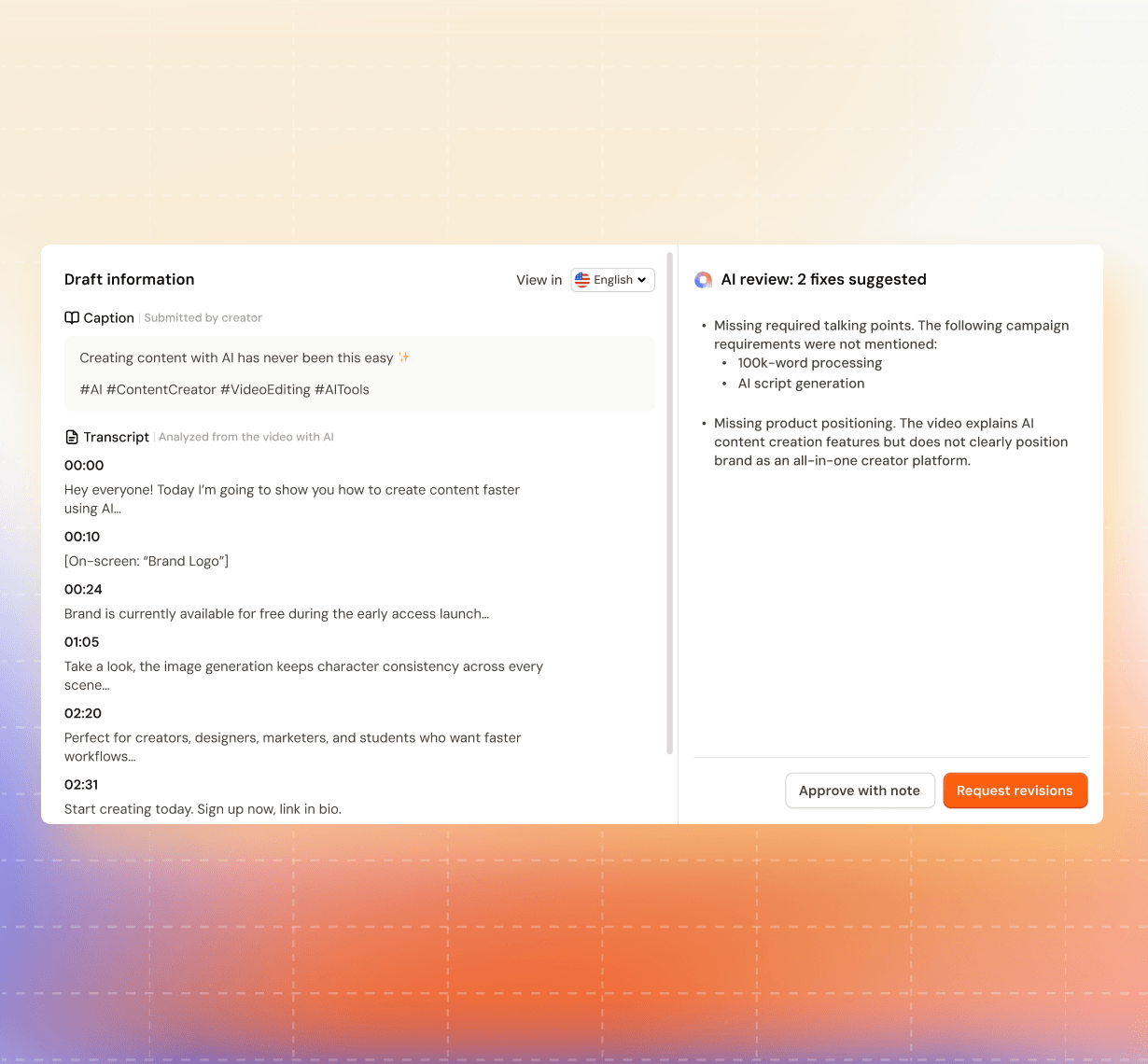
AhaCreator
From creator matching to payment. One connected workflow.
Bring outreach, negotiation, contracts, content review, and campaign tracking together with AhaCreator. Pay creators through the platform and explore how AI supports your team at each stage of a collaboration.
Frequently asked questions
Questions, answered
What is a micro-influencer platform?
It is a broad label for software, marketplaces, or managed networks that help brands find, evaluate, organize, or work with smaller-audience creators. Products vary substantially: some emphasize discovery, while others focus on applications, campaign workflow, affiliate commerce, payments, or managed services. Brands should classify each option by its primary job rather than its label.
What is the best micro-influencer platform for a brand?
There is no universally best option. The best fit is the platform that clears the brand’s mandatory requirements, demonstrates relevant creator supply, supports the required workflow and integrations, and has an acceptable total operating cost and risk profile. Named-platform details should be verified directly because capabilities, coverage, integrations, and pricing can change.
Should a brand choose a marketplace or a discovery database?
Choose based on the sourcing model. A marketplace may fit when the brand wants participating creators to respond within a structured process. A discovery database may fit when the team wants to search a broader set of profiles and manage outreach separately. Test actual creator availability and post-discovery workflow before deciding.
How should brands verify a platform’s creator network?
Run representative searches for priority niches, channels, locations, languages, and audience characteristics. Inspect a sample of results for relevance, activity, contactability, data freshness, and actual fit. Do not rely only on the platform’s aggregate creator count.
Do small micro-influencer programs need dedicated software?
Not necessarily. A controlled spreadsheet, shared database, existing CRM, and project-management process may be adequate when volume and complexity are low. Dedicated software becomes more compelling when discovery, duplicate outreach, approvals, rights records, payments, reporting, permissions, or cross-team coordination create recurring operational problems.
How long should a micro-influencer platform pilot run?
There is no universal duration. The pilot should be long enough to complete the representative workflows that matter to the decision, test relevant creator searches, involve required user roles, and validate important data transfers. Define acceptance criteria and a decision date before starting.
Can one platform manage the entire micro-influencer workflow?
Some products may cover several stages, but coverage alone does not prove adequate depth or fit. Test discovery, outreach, campaign operations, approvals, payments, rights records, reporting, and integrations separately. A specialist tool or combined stack may be better if an all-in-one product creates important compromises.
Turn Your Requirements Into a Defensible Shortlist
Create a one-page requirements brief, mark the pass-or-fail gates, and give every vendor the same search scenarios and workflow tasks. Score only the options that clear the gates, then validate the preferred choice with current product evidence and a limited pilot.
- Build the requirements brief
- Create the weighted scorecard
- Plan a representative platform pilot
Sources
- Top Influencer Marketing Platforms in 2026: How to ChooseUsed for article body, quick answer
- Micro-influencer programsUsed for article body, quick answer
- Collabstr | Influencer Marketing Made EasyUsed for article body
- TRIBE | Influencer Marketing Platform For Brands & AgenciesUsed for article body
- 9 Best Microinfluencer Platforms in 2026Used for article body
- Top 16 Influencer Marketing Platforms for 2026 | Sprout SocialUsed for article body
- INFLUENCER: Global Influencer Marketing AgencyUsed for article body