An influencer marketplace gives brands and creators a structured place to find one another and arrange collaborations. Depending on the provider, that structure can extend beyond matching to briefs, creator data, negotiations, approvals, payments, and reporting. This guide explains the model, its typical workflows, and the questions to ask before choosing it as a sourcing channel.
Quick answer
An influencer marketplace is an online environment where brands and creators find one another and arrange collaborations. It commonly supports creator discovery or campaign applications and may also provide briefs, profile data, negotiation, deliverable confirmation, approvals, payments, and reporting. Exact capabilities vary by provider.
Decision rule
Choose an influencer marketplace when structured access to collaboration-ready creators or brand opportunities is the main need. Choose another approach when direct relationships, specialized affiliate operations, broader campaign management, or discovery outside an enrolled network matters more.
- When The brand needs creators who are open to paid work and wants a shorter path from search or application to an agreed collaboration.
- Evaluate an influencer marketplace.
- When The brand already has creator relationships but needs centralized outreach, approvals, records, analytics, and payments.
- Evaluate a broader influencer marketing platform.
- When Trackable sales, attribution rules, commissions, and recurring performance payouts are the core workflow.
- Evaluate an affiliate platform or a combined creator-commerce system.
- When The desired creators are unlikely to participate in a marketplace, or the brand prioritizes owned, long-term relationships.
- Use direct sourcing, referrals, community recruitment, or managed support.
- When Only one operational function is missing from an otherwise effective process.
- Consider a specialist discovery, analytics, payment, or workflow tool instead of replacing the full stack.
Comparison
| Criterion | Influencer marketplace | Influencer marketing platform | Affiliate platform |
|---|---|---|---|
| Primary role | Connect participating brands and creators and facilitate collaborations | Plan, operate, and measure creator programs | Track referred actions and administer performance commissions |
| Typical starting point | Creator search, campaign posting, matching, or applications | Discovery, outreach, imported creator records, or campaign planning | Affiliate recruitment followed by link or code assignment |
| Common workflow emphasis | Matching, offers, deliverables, orders, and payments | Outreach, creator management, approvals, analytics, integrations, and payments | Links, codes, attribution, conversions, commissions, and payouts |
| Best aligned with | Structured sourcing and transactions with collaboration-ready participants | Ongoing programs involving multiple creators, stages, stakeholders, or data sources | Performance partnerships in which attributable actions determine compensation |
| Category overlap | May include campaign management, analytics, and affiliate features | May contain a marketplace and affiliate capabilities | May be incorporated into a broader influencer or creator-commerce platform |
What Is an Influencer Marketplace?
An influencer marketplace is an online environment that connects brands seeking creator collaborations with creators seeking paid or otherwise defined brand opportunities.
On the brand side, a marketplace may provide searchable creator profiles, campaign postings, applications, rates or quotes, messaging, and transaction tools. On the creator side, it can provide a profile through which the creator becomes discoverable, reviews opportunities, submits applications or offers, agrees to terms, delivers content, and receives payment.
The defining characteristic is the marketplace’s role in bringing the two sides together. Some providers stop close to discovery and matching, while others support most of the workflow from the initial search or brief through approval, payment, and reporting. Features are therefore provider-specific rather than inherent to every influencer marketplace.
Collabstr | Influencer Marketing Made Easy · Influencer Marketing Platform | Upfluence
What an Influencer Marketplace Typically Helps Participants Do
A marketplace can reduce the disconnected work involved in finding and hiring creators. Common functions include:
- Creator discovery: Brands search by factors such as platform, niche, audience, location, budget, or engagement information where available.
- Campaign posting: A brand publishes a brief and lets interested or matched creators apply.
- Profile evaluation: Brands review creator content, audience information, performance indicators, stated services, rates, or quotes.
- Collaboration coordination: The parties communicate about scope, timing, revisions, compensation, and other expectations.
- Deliverable and rights confirmation: Some marketplaces record the content required and how the brand may use it.
- Approval and payment: Some providers hold or process funds, release payment after approval, collect payout details, or assist with payment documentation.
- Tracking and reporting: More extensive products can monitor content, engagement, sales, or other campaign results.
These capabilities should be treated as a checklist, not a universal definition. For example, one marketplace may emphasize direct orders and protected payments, while another is part of a broader system offering creator relationship management, ecommerce integrations, affiliate attribution, and campaign analytics.
Collabstr | Influencer Marketing Made Easy · Influencer Marketing Platform | Upfluence
How the Brand Workflow Works
1. Define the requirement
Specify the campaign objective, intended audience, creator niche, publishing channel, market, content format, schedule, deliverables, budget range, and intended content usage. Clear requirements make marketplace filters and applications more useful.
2. Search or publish a brief
A brand can search available creator profiles, publish an opportunity for creators to apply, or use a combination of both. Some providers also surface suggested matches.
3. Evaluate candidates
Review actual content and brand fit—not only profile filters. Where available, inspect audience demographics, engagement information, previous work, reviews, quoted rates, availability, and relevant performance data. Marketplace verification labels and metrics can inform screening, but they should not replace human review.
For a deeper sourcing process, see how to build a campaign-ready influencer shortlist.
4. Confirm commercial and creative terms
Before committing funds, document the deliverables, deadlines, compensation, revision process, approval criteria, disclosure responsibilities, cancellation terms, and usage rights. Determine whether the agreement is with the creator directly, through the marketplace, or under a combination of marketplace and creator-specific terms.
5. Approve work and complete payment
The creator submits the agreed work through the supported process. If the marketplace provides approval and payment tools, the brand reviews the deliverables and authorizes payment according to those terms. The workflow should end with clear records of what was accepted, what rights were granted, and what was paid.
Collabstr | Influencer Marketing Made Easy · Influencer Marketing Platform | Upfluence
How the Creator Workflow Works
A creator typically starts by creating or maintaining a profile that describes their channels, audience, content categories, services, portfolio, and commercial terms. The marketplace may then make the creator visible in brand searches or allow them to apply to campaign briefs.
When an opportunity appears suitable, the creator reviews the brand, scope, schedule, deliverables, rights, compensation, and payment conditions. The parties may negotiate before confirming the collaboration. Once accepted, the creator produces and submits the required work, responds to revisions covered by the agreement, and receives payment through the marketplace’s stated process.
Creators should check more than the advertised opportunity volume. Important details include eligibility rules, fees, payout timing, supported countries and currencies, dispute procedures, cancellation terms, tax or identity-document requirements, and whether accepting a job grants the brand any content usage rights. These conditions vary by provider and may also vary by transaction.
Collabstr | Influencer Marketing Made Easy · Influencer Marketing Platform | Upfluence
Influencer Marketplace vs. Influencer Marketing Platform vs. Affiliate Platform
The labels describe different primary jobs, but real products frequently combine them.
An influencer marketplace primarily facilitates access and matching between brands and creators, often with a structured route to a transaction. An influencer marketing platform is a broader software category that can support discovery, outreach, creator records, campaign management, content approval, analytics, and payments—including creators found outside an internal marketplace. An affiliate platform primarily tracks attributable actions through links, codes, or similar mechanisms and calculates performance-based commissions.
Overlap is common. A marketplace may include campaign management and reporting, while an influencer marketing platform may contain a marketplace. The same product may also support flat fees, affiliate commissions, promotional codes, sales attribution, and creator payments.
Classify a product by the workflow it actually supports rather than its marketing label. Brands comparing broader systems can use this fit-based guide to influencer marketing platforms.
Collabstr | Influencer Marketing Made Easy · Influencer Marketing Platform | Upfluence
When an Influencer Marketplace Is a Good Fit
A marketplace can be a strong fit for a brand when:
- The team needs a faster route to creators who are open to collaboration.
- Searchable profiles or inbound applications would improve sourcing efficiency.
- Comparable creator information, rates, or quotes would make initial evaluation easier.
- Briefs, communication, deliverables, approvals, and payments need a more structured record.
- The team wants to reduce manual coordination across spreadsheets, email, messaging, and payment systems.
- Available ecommerce, attribution, or reporting integrations match the program’s measurement needs.
It can suit a creator when the marketplace offers relevant brand opportunities, supports the creator’s location and channels, makes expectations visible, and provides acceptable commercial, payment, and dispute terms.
Fit depends on the quality and relevance of the available participants—not merely the advertised size of a creator database or number of registered brands. A brand should test searches using its actual audience, niche, channel, market, and budget requirements before committing.
Collabstr | Influencer Marketing Made Easy · Influencer Marketing Platform | Upfluence
When to Use a Different Approach
A marketplace may not be the best primary channel when the required creators are not active in its network, the brand needs discovery beyond enrolled participants, or the marketplace workflow conflicts with the brand’s procurement and approval processes.
Consider another approach when:
- Direct relationship building is the priority. Manual research, referrals, an existing customer community, or direct outreach can be preferable when long-term creator relationships and organic brand affinity matter most.
- Only discovery is missing. A specialist creator database may be enough if outreach, contracting, project management, payment, and reporting already work well.
- Affiliate operations are central. A dedicated affiliate solution may fit better when links, codes, attribution rules, commission calculations, and recurring performance payouts are the principal requirements.
- The program needs broader operational control. A complete influencer marketing system may be more suitable when the team must manage creators from many sourcing channels, maintain relationship histories, coordinate stakeholders, and consolidate analytics.
- Specialist human support is required. An agency or managed network may fit when the brand lacks sourcing, negotiation, production, or campaign-management capacity.
These approaches can be combined. A brand might source some creators through a marketplace, recruit others directly, and manage both groups in a broader system.
Collabstr | Influencer Marketing Made Easy · Influencer Marketing Platform | Upfluence
What to Verify Before Joining or Using a Marketplace
Evaluate a marketplace using a real campaign scenario rather than a generic feature tour.
Participant and opportunity fit
- Does it have relevant creators or brands in the required countries, niches, channels, and content formats?
- How does it vet participants, profiles, audience data, reviews, and performance claims?
- Can a brand inspect content and useful audience information before committing?
Pricing and payment
- What subscription, transaction, payment-processing, currency-conversion, or withdrawal fees apply?
- When is the brand charged, and when does the creator receive funds?
- Are funds held pending approval, and how are disputes, refunds, cancellations, and chargebacks handled?
- Which countries, currencies, payout methods, identity checks, and tax-document processes are supported?
Deliverables and rights
- Can both parties record deliverables, deadlines, revisions, approval standards, and content usage rights?
- Are licensing duration, territory, channels, paid-media use, editing permissions, and exclusivity addressed where relevant?
- Does the process support required advertising disclosures and other compliance work, or does responsibility remain with the participants?
Workflow and data
- Are communication, applications, approvals, payments, and records centralized?
- Can outside creator relationships be added, or is the workflow limited to marketplace hires?
- Which ecommerce, analytics, CRM, affiliate, and team tools integrate with it?
- What metrics are available, how are they generated, and can records be exported?
Feature availability and commercial terms can change. Confirm current behavior in the provider’s documentation, contract, demonstration, and test workflow before relying on it.
Collabstr | Influencer Marketing Made Easy · Influencer Marketing Platform | Upfluence
Conclusion
An influencer marketplace is most useful when access to collaboration-ready participants and a structured path from discovery to payment would remove meaningful administrative work. It is not automatically the right solution for every creator program. Brands should verify the marketplace’s creator coverage, data, commercial terms, rights workflow, payment process, integrations, and reporting against a real campaign scenario. If the primary need is broader relationship management, specialized affiliate tracking, or direct creator recruitment, another platform category—or a connected stack—may fit better.
AhaCreator
From creator matching to payment. One connected workflow.
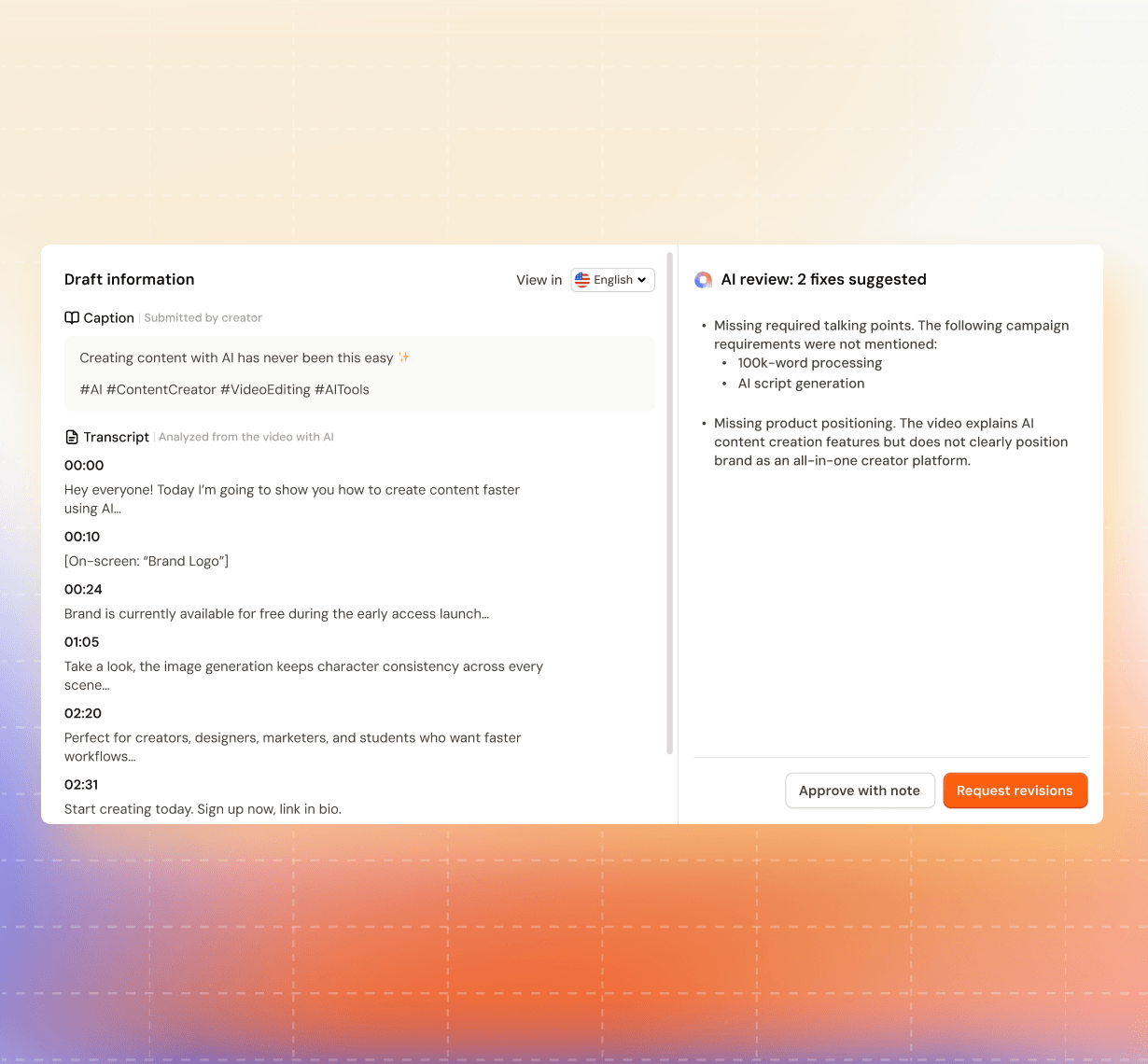
Bring outreach, negotiation, contracts, content review, and campaign tracking together with AhaCreator. Pay creators through the platform and explore how AI supports your team at each stage of a collaboration.
Frequently asked questions
Questions, answered
Do influencer marketplaces only serve large brands?
No. The model can support founders, small marketing teams, agencies, and larger organizations. Practical suitability depends on the marketplace’s fees, minimum commitments, creator relevance, workflow, and required operating capacity—not brand size alone.
Does a creator need a minimum audience size to join?
There is no universal minimum for the category. Eligibility, supported channels, audience requirements, location rules, and profile-review standards vary by marketplace. Creators should check the current participation rules of the specific provider.
Does an influencer marketplace guarantee creator quality or campaign results?
No. Profiles, vetting, reviews, audience data, and payment controls can reduce search and transaction friction, but they do not guarantee brand fit, content quality, audience authenticity, sales, or other outcomes. Brands still need to evaluate creators and define clear terms.
Collabstr | Influencer Marketing Made Easy · Influencer Marketing Platform | Upfluence
Can a marketplace support both paid content and affiliate commissions?
Yes, some products combine marketplace matching with flat-fee payments, promotional codes, affiliate commissions, sales attribution, and performance reporting. This overlap is provider-specific, so verify the available compensation models and tracking methodology.
Is an influencer marketplace the same as a creator database?
Not necessarily. A database may primarily help brands find and evaluate creators. A marketplace also facilitates access between participating brands and creators and commonly provides a route to applications, offers, orders, or another transaction. Some products combine both functions.
Collabstr | Influencer Marketing Made Easy · Influencer Marketing Platform | Upfluence
Can brands use marketplace tools with creators found elsewhere?
Some broader products allow brands to add existing or externally sourced creators to the same briefing, payment, tracking, or relationship-management workflow. This is not universal and should be verified with each provider.
Collabstr | Influencer Marketing Made Easy · Influencer Marketing Platform | Upfluence
Choose the Model Before Choosing the Vendor
Write down the creator audience, sourcing method, collaboration workflow, payment model, rights requirements, and measurement needs for one real campaign. Use that scenario to test whether a marketplace removes the most important constraint—or whether a broader platform, affiliate solution, or direct approach would fit better.
- Build Your Marketplace Requirements Checklist
- Compare Influencer Marketing Platform Types
Sources
- Collabstr | Influencer Marketing Made EasyUsed for article body, quick answer, decision rule, comparison matrix
- Influencer Marketing Platform | UpfluenceUsed for article body, quick answer, decision rule, comparison matrix