Finding Instagram influencers is not simply a search for popular accounts. The goal is to build a focused shortlist of creators whose content, audience, location, and working requirements could fit your campaign. Start with a clear sourcing brief, search Instagram’s native discovery surfaces, use a creator-discovery platform when you need more scale or data, and record every promising candidate in a consistent format.
Quick answer
To find Instagram influencers, first define your campaign objective, target audience, niche, location, content needs, and budget. Then search your followers, tagged posts, Explore, relevant hashtags, recommended accounts, customer communities, and competitor activity. Use a creator-discovery platform when you need to filter many profiles by creator or audience data. Save suitable candidates in a consistent shortlist for deeper fit and authenticity review.
Decision rule
Choose the simplest discovery channel that can produce enough relevant candidates and the data needed for your next decision.
- When You need a small, niche, or highly contextual candidate list
- Start with followers, tagged posts, Explore, hashtags, similar accounts, and category activity on Instagram.
- When You need local creators or people already familiar with the brand
- Prioritize existing customers and followers, tagged content, local searches, and trusted community referrals.
- When You need dozens of candidates, detailed audience filters, or several market segments
- Use a creator-discovery platform, then inspect the resulting profiles directly on Instagram.
- When A candidate looks relevant but important data is missing
- Place the creator on hold and record the missing information instead of treating the profile as approved.
- When The creator clearly conflicts with the audience, content, location, safety, or category requirements
- Remove the candidate from the working shortlist.
1. Define Your Instagram Influencer Search Brief
Before opening Instagram, write down what a suitable creator needs to help the campaign accomplish. Without this brief, follower count and visual appeal can easily displace audience relevance.
Define these requirements:
- Campaign objective: Decide whether the campaign should build awareness, generate traffic or sales, produce reusable content, or support another measurable outcome.
- Target audience: Record the desired audience’s location, age range, interests, purchasing relevance, and other important characteristics.
- Creator niche: Identify the subjects the creator should regularly cover, such as skincare, home improvement, fitness, food, or local travel.
- Geographic requirements: Distinguish between where the creator lives and where their audience is located. These are not necessarily the same.
- Content needs: Note the required formats, product focus, key messages, approximate schedule, and whether the brand may need content usage rights.
- Practical constraints: Establish the available budget, campaign timing, category restrictions, and any potential competitor conflicts.
- Initial evidence to collect: Decide which audience, engagement, content, contact, and commercial details must be available before a candidate can advance.
Avoid selecting a universal follower or engagement threshold without context. The appropriate range depends on the objective, niche, format, audience size, and industry. Follower count should support the decision rather than determine it.
If these campaign choices have not been made yet, create an Instagram influencer marketing strategy before building a large creator list.
2. Find Creators Directly on Instagram
Manual discovery works particularly well for focused searches and smaller campaigns because it lets you inspect each creator’s content in context.
Start with people already connected to your brand
Review your followers for people who publish original content in your category. Then inspect your tagged posts and brand mentions for creators who already use, discuss, or show your products. Existing familiarity does not guarantee suitability, but it can reveal more natural partnership candidates.
For each promising account, check whether it is active, covers a relevant niche, has an appropriate content style, and receives meaningful audience responses.
Search Explore, keywords, and hashtags
Use Instagram’s search and Explore surfaces with combinations of:
- Category terms, such as “running coach” or “home organization”
- Location terms, such as a city, state, or regional nickname
- Creator and category hashtags
- Product-use terms and problems your product solves
- Locations or topics associated with your target audience
Open relevant posts rather than relying on the results page alone. Review the account behind each post and save profiles that meet the basic brief. Hashtag research can uncover niche creators, but it often requires substantial manual review and does not by itself establish audience authenticity or fit.
Expand from relevant accounts
Once you find one plausible creator, review Instagram’s recommended or similar accounts. Examine who engages substantively with that creator and look at other creators appearing in the same content community. Treat recommendations as discovery leads, not endorsements.
Review competitor and category activity
Inspect competitors’ tagged posts, creator partnerships, and relevant follower communities. This can uncover creators already active in your category and show which formats attract meaningful interaction. Record prior competitor work because it may create an exclusivity or category conflict that needs later review.
Ask customers and trusted communities
Customers may know which creators people in your target market consult for recommendations. You can ask loyal customers directly or request referrals from relevant partners and professional communities. Confirm every referral against the same sourcing brief rather than assuming a recommendation is automatically suitable.
6 Simple Ways to Find Influencers on Instagram | Aspire · influData - 6 Brilliant Ways to Find Instagram Influencers in Your Niche
3. Use Creator-Discovery Platforms When You Need Scale or Data
Move beyond manual discovery when you need to review many creators, compare multiple audience segments, search across markets, or standardize the data collected for each profile. A platform can also be useful when Instagram does not expose enough audience or authenticity information for efficient filtering.
Current vendor pages illustrate the kinds of filters available:
- Collabstr says brands can search by platform, niche, audience, and budget, and view engagement rates and audience demographics before committing. These are Collabstr’s own descriptions of its service, not an independent assessment of its quality.
- Modash provides a free preview with filters for creator location, follower count, engagement rate, fake followers, public email availability, and audience location, gender, and age. Its page states that additional filters—such as bio keywords and average views—and more audience data are available through its trial. These are likewise vendor-stated capabilities.
A practical filtered search might combine Instagram, United States, a relevant niche or bio keyword, creator location, audience location, and an appropriate follower range. Add engagement or audience filters only when they support the campaign objective; excessive filtering can remove potentially relevant candidates before their content is reviewed.
Do not interpret a database result as a recommendation. Open each candidate’s Instagram profile and inspect recent content, sponsored work, comment quality, audience relevance, and brand fit. Also verify that displayed data is sufficiently current for your decision.
If you expect to source micro-creators repeatedly, use a consistent scorecard to compare micro-influencer platforms by coverage, data quality, workflow, cost, and operational fit rather than choosing solely by database size.
Collabstr | Influencer Marketing Made Easy · Free Influencer Search Tool: Search 350M+ Influencers · 6 Simple Ways to Find Influencers on Instagram | Aspire
4. Build a Shortlist That Is Ready for Fit Review
Record every plausible creator in one spreadsheet, database, or platform collection. Consistent fields make it easier to compare candidates and prevent an attractive profile from overshadowing weak audience relevance.
Use these shortlist columns:
| Field | What to record |
|---|---|
| Creator identity | Name, Instagram handle, and profile URL |
| Discovery source | Follower list, tagged post, Explore, hashtag, referral, competitor research, or platform |
| Creator details | Stated location, niche, and primary content formats |
| Content observations | Recurring topics, visual style, tone, product relevance, and recent activity |
| Audience signals | Available audience location, age, gender, interests, or other campaign-relevant data |
| Performance signals | Follower count, average views if available, engagement data, and a note on comment quality |
| Brand history | Recent sponsorships, relevant partnerships, competitor work, and possible conflicts |
| Contact route | Public business email, platform contact option, or another publicly provided route |
| Commercial information | Published price or quote if available; otherwise mark it as unknown |
| Open questions | Missing audience data, rights, availability, rates, conflicts, or authenticity concerns |
| Initial status | Keep, hold for more information, or remove |
Apply a simple first-pass decision:
- Keep candidates whose niche, content, geography, and apparent audience align with the brief and who have enough information for deeper review.
- Hold candidates who appear relevant but have important missing information, such as audience location or a reliable contact route.
- Remove candidates with a clear mismatch, such as an irrelevant audience, incompatible content, inactive profile, evident category conflict, or brand-safety concern.
This is an initial shortlist—not a hiring decision. Before contacting or selecting creators, conduct a deeper review of audience authenticity, engagement quality, organic and sponsored performance, content consistency, prior partnerships, brand safety, costs, deliverables, usage rights, and exclusivity requirements.
Conclusion
The most effective influencer search starts with clear campaign and audience requirements. Search your existing brand community first, expand through Instagram’s discovery surfaces and relevant category activity, and introduce a discovery platform when manual research becomes difficult to manage. The immediate goal is not to select a winner—it is to produce a documented shortlist that is ready for deeper fit, authenticity, safety, and commercial review.
AhaCreator
From creator matching to payment. One connected workflow.
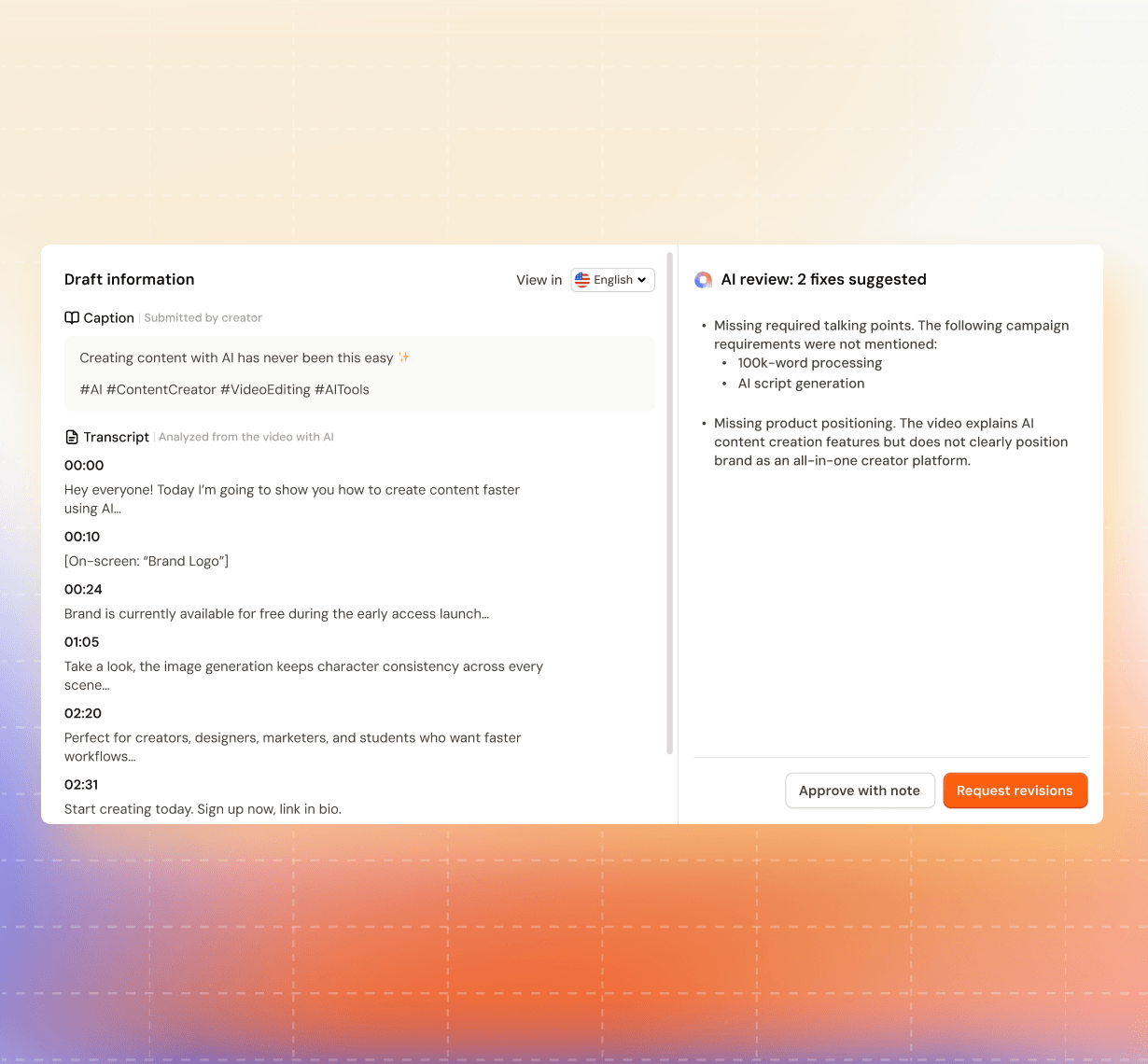
Bring outreach, negotiation, contracts, content review, and campaign tracking together with AhaCreator. Pay creators through the platform and explore how AI supports your team at each stage of a collaboration.
Frequently asked questions
Questions, answered
How can I find Instagram influencers for free?
Start with your brand’s follower list and tagged posts, then use Instagram Explore, relevant keywords and hashtags, recommended accounts, competitor activity, customer referrals, and professional communities. These methods do not require a paid discovery subscription, but they require manual profile review and may provide limited audience or authenticity data.
6 Simple Ways to Find Influencers on Instagram | Aspire · influData - 6 Brilliant Ways to Find Instagram Influencers in Your Niche
How do I find local Instagram influencers?
Combine your niche with city, state, neighborhood, venue, event, and regional terms in Instagram searches and hashtags. Review location-specific content and ask local customers or partners for recommendations. For larger searches, use a discovery platform that supports creator-location and audience-location filters, remembering that a creator’s residence and audience geography are different criteria.
Free Influencer Search Tool: Search 350M+ Influencers · 6 Simple Ways to Find Influencers on Instagram | Aspire · influData - 6 Brilliant Ways to Find Instagram Influencers in Your Niche
Should I use Instagram search or an influencer-discovery platform?
Use manual Instagram research when the search is focused, the candidate volume is small, or you need to understand content in context. Use a discovery platform when you need to review many profiles, filter by creator or audience characteristics, compare data consistently, or manage searches across multiple segments or markets. The two methods can be combined: use platform filters to identify candidates and Instagram to inspect their current content.
Free Influencer Search Tool: Search 350M+ Influencers · 6 Simple Ways to Find Influencers on Instagram | Aspire
What matters more than an influencer’s follower count?
Assess whether the creator reaches the intended audience and produces relevant, consistent content. Also examine meaningful engagement, audience authenticity, recent organic and sponsored performance, brand fit, safety concerns, previous partnerships, and commercial requirements. Follower count is one signal rather than proof of suitability.
Scale creator marketing without scaling busywork
Launch and scale creator partnerships with less manual work and more control.
Sources
- Free Influencer Search Tool: Search 350M+ InfluencersUsed for article body, quick answer, decision rule
- 6 Simple Ways to Find Influencers on Instagram | AspireUsed for article body, quick answer, decision rule
- influData - 6 Brilliant Ways to Find Instagram Influencers in Your NicheUsed for article body, quick answer, decision rule
- Collabstr | Influencer Marketing Made EasyUsed for article body