To hire a content creator successfully, start with the work—not a generic job title or a list of popular creators. Define the format, audience, channel, deliverables, timeline, and business objective first. Then source candidates with relevant portfolios, evaluate how they think and collaborate, and document the commercial and usage terms before production begins. This guide walks US brands and marketing teams through that process without assuming any single hiring platform is best.
Quick answer
To hire a content creator, define the exact format, audience, channel, deliverables, deadline, budget approach, and usage needs first. Source candidates through marketplaces, referrals, communities, or direct discovery; evaluate relevant portfolio work and communication with a consistent scorecard; use a limited paid test if necessary; then sign an agreement covering scope, revisions, payment, ownership, usage rights, disclosures, and cancellation.
Decision rule
Choose the creator whose directly relevant work, proposed approach, availability, and commercial terms best match the written brief—not automatically the largest audience or lowest price.
- When You need defined assets but not access to the creator’s audience
- Prioritize production skills, format expertise, brand adaptability, and licensing terms.
- When The creator must publish to their own followers
- Evaluate audience fit and distribution alongside creative quality, and separate posting obligations from asset-production and usage fees.
- When The project requires specialized or regulated subject knowledge
- Favor a niche expert who can demonstrate relevant work and compliance awareness.
- When You need several formats or priorities may change
- Consider a versatile generalist, but verify competence in every mandatory format.
- When The engagement is high-value, ongoing, or difficult to reverse
- Interview finalists, check relevant references where appropriate, and run a small paid test before committing.
- When Deliverables and requirements are stable
- A fixed project fee can provide clearer budget control.
- When Scope is variable or highly collaborative
- Consider hourly billing or a retainer with explicit limits, reporting, and approval rules.
Comparison
| Criterion | Freelance marketplace or matching service | Referral or existing network | Community, event, or direct discovery |
|---|---|---|---|
| Best suited to Sources: | A structured search across visible profiles or portfolios | Trust-sensitive work and roles where reliability or specialist knowledge matters | Niche, style-led, or platform-native talent discovery |
| Primary advantage Sources: | Can consolidate discovery and parts of the hiring workflow | Provides a warm introduction and contextual reputation signal | Can surface creators who are not actively applying through job boards |
| Primary limitation Sources: | Coverage, fees, tools, and terms vary by provider | A referral does not prove current fit, availability, or price | Search and outreach can require more manual work |
| What to verify Sources: | Relevant talent coverage, current fees, payment process, rights workflow, and support | Portfolio relevance, personal contribution, availability, scope, and commercial terms | Whether the creator accepts client work and whether production, posting, or both are offered |
Define the content creator you need
“Content creator” can describe a writer, videographer, editor, designer, photographer, on-camera personality, UGC creator, social producer, or someone who combines several of those skills. Hiring becomes easier when you define the actual work rather than searching by the broad title alone.
Start with these decisions:
- Objective: What should the content accomplish—awareness, education, lead generation, conversion, retention, or another measurable outcome?
- Audience: Who should see it, and what does that audience already know or believe?
- Content format: Specify articles, product photography, short-form video, long-form video, social graphics, email, tutorials, UGC-style assets, or another format.
- Distribution channel: Identify where the content will appear. A creator who excels at vertical social video may not be the right choice for long-form YouTube production or technical articles.
- Creator role: Clarify whether you need production only, an on-camera creator, subject-matter expertise, publishing, community management, or strategic input.
- Deliverables: State the quantity, length, dimensions, file types, and any required source or raw files.
- Timeline: Include briefing, concept approval, draft delivery, feedback, revisions, and final delivery dates.
- Success criteria: Define the quality and performance indicators relevant to the assignment.
Decide whether specialization or versatility matters more. A niche specialist may offer stronger subject knowledge or platform fluency, while a generalist may be more useful when one person must adapt a concept across several formats. Review your existing content before making this choice: the gap may be production capacity, platform expertise, strategic thinking, or industry credibility rather than “more content” in general.
Write a creator brief that candidates can price and assess
A useful hiring brief should allow a creator to answer three questions: “Can I do this well?”, “Can I deliver it on time?”, and “Can I quote it accurately?”
Include:
- A short description of the brand, product, and target audience.
- The project objective and intended customer-journey stage.
- Required formats, channels, and number of deliverables.
- Mandatory skills, such as scripting, filming, editing, SEO, animation, or on-camera presentation.
- Brand voice and visual requirements, supported by relevant examples.
- Required calls to action, product claims, accessibility elements, or disclosures.
- Milestones, final deadline, and expected communication cadence.
- The number of review rounds and who provides final approval.
- Whether the creator must publish to their own audience or only produce assets for the brand.
- The anticipated usage, including organic channels, paid advertising, duration, territory, and whether adaptation is allowed.
- The proposed budget or a request for an itemized quote.
- What candidates should submit, such as selected work samples, availability, process, and references.
Avoid asking for every possible skill. Separate must-have requirements from preferences so strong candidates are not screened out for irrelevant reasons. If the scope is still uncertain, say which elements need the creator’s recommendation and ask them to identify assumptions in their proposal.
Choose the right sourcing route
Brands can find creators through freelance marketplaces, referrals, professional communities, industry events, creator networks, social platforms, and direct portfolio searches. No route is universally best.
Use a freelance marketplace or matching service when you want searchable profiles, visible work samples, or a more structured hiring workflow. Marketplace coverage, fees, payment tools, rights workflows, and current features vary, so verify them directly before committing. Contra is one current example of a marketplace displaying creator portfolios and services, but one provider does not establish which platform is best for every project.
Use referrals and an existing network when trust, reliability, or specialized industry knowledge matters most. Ask colleagues, agencies, previous freelancers, and creators you already trust for introductions. A referral still requires portfolio and terms review; it should not replace screening.
Use professional communities and events to find specialists who may not be actively applying on job boards. Relevant design, video, marketing, writing, or industry-specific communities can be especially useful for niche assignments.
Use direct discovery when visual or platform-native style is central to the role. Search the channels where the work will appear, identify creators already producing the desired format, and then determine whether they offer freelance production services. Do not assume a public audience means the creator is available or that audience access is included in a production fee.
If the requirement is specifically for an influencer who will distribute content to their own followers, use an audience-focused sourcing process rather than treating the hire as production alone. See how to hire influencers and build a campaign-ready shortlist. If you are considering a structured platform, review how influencer marketplaces work.
Screen portfolios against the actual assignment
Create a scorecard from the brief and use it for every candidate. A practical review should cover:
- Format relevance: Has the creator produced the type of asset you need?
- Channel fluency: Does the work fit the conventions and technical requirements of the intended platform?
- Audience or industry fit: Can the creator communicate credibly to your target customer?
- Creative quality: Review storytelling, hooks, structure, composition, editing, writing, and calls to action as applicable.
- Consistency: Is quality dependable across several projects rather than one standout example?
- Brand adaptability: Can the creator work in different brand voices without making every project look the same?
- Strategic judgment: Can they explain the objective, constraints, choices, and results behind a portfolio piece?
- Reliability signals: Look for clear communication, organized proposals, realistic timelines, and professional handling of feedback.
- Compliance and brand safety: Confirm that they understand any relevant claims, disclosure, accessibility, or industry requirements.
Ask candidates to present two or three highly relevant examples rather than sending an unrestricted portfolio. For each example, ask what they personally handled, what the brief required, what constraints existed, and how the work was evaluated. Performance data can be useful, but request context: results may also depend on media spend, distribution, offer quality, audience size, or decisions outside the creator’s control.
Do not confuse production talent with reach. A creator may be excellent at making brand-owned assets without having—or providing access to—a large personal audience.
Interview finalists and use a fair paid test when needed
A structured interview can reveal capabilities that a portfolio cannot. Ask finalists to explain:
- How they would approach your brief and what information is missing.
- How they adapt one idea to the required channel or format.
- How they handle conflicting stakeholder feedback.
- What commonly causes delays and how they communicate them.
- How they check accuracy, brand alignment, accessibility, and platform specifications.
- Which tasks they perform themselves and which they subcontract.
- How they use analytics or prior results to improve creative decisions.
For a substantial or ongoing engagement, consider a small paid test based on work you genuinely need. Keep it narrower than the full assignment, give every finalist comparable instructions, and define how the test material may be used. Evaluate the outcome with the same scorecard used for the portfolio review.
Avoid requesting unpaid campaign concepts, finished speculative assets, or extensive custom strategy. Besides being unfair to candidates, oversized tests can favor those with the most free time rather than the best fit. If a live exercise is used during an interview, keep it brief and focused on discussing an approach rather than extracting usable work.
Compare proposals and select the best-fit creator
Compare finalists across the factors that affect delivery, not price alone. A simple weighted scorecard can include relevant work quality, subject or audience fit, platform expertise, proposed approach, communication, availability, and total commercial fit.
Review each proposal for assumptions and exclusions. One quote may include scripting, sourcing props, captions, raw footage, and two revision rounds, while another covers only final editing. Normalize the scope before comparing totals.
Before choosing, confirm:
- The creator’s availability for every major milestone.
- Who will perform the work and whether subcontractors are involved.
- What the price includes and what triggers an additional fee.
- Whether expenses, travel, talent, locations, music, stock assets, or equipment are included.
- Which dependencies belong to the brand, such as product delivery or timely approvals.
- Whether references or previous client contacts are appropriate for a higher-value engagement.
Choose the candidate offering the strongest fit and a credible delivery plan within your constraints. The cheapest proposal can become more expensive if it omits essential production work, revisions, or usage rights.
Agree on scope, payment, and content rights before work begins
Put the agreement in writing before production starts. The level of legal review should reflect the value, risk, duration, and intended use of the work.
At minimum, document:
- Deliverables: Quantity, specifications, source files, raw files, captions, versions, and related assets.
- Milestones: Concept, draft, feedback, revision, and final-delivery dates.
- Responsibilities: Products, locations, access, approvals, factual claims, and other inputs each party must provide.
- Revisions: Number of included rounds, what counts as a revision, and how out-of-scope changes are priced.
- Compensation: Hourly, fixed-project, milestone, or retainer structure; deposit; invoicing; payment timing; expenses; and late or cancellation terms.
- Usage rights: Where, how, for how long, and in which territories the brand may use the content.
- Paid media: Whether advertising, boosting, whitelisting, or other paid amplification is included.
- Ownership and licensing: Who owns final and working files, when rights transfer, and whether the creator may display the work in a portfolio.
- Exclusivity: Covered competitors or categories, territory, and duration.
- Attribution and editing: Whether credit is required and whether the brand may crop, rewrite, combine, localize, or otherwise adapt the work.
- Compliance: Required sponsorship disclosures, approvals, claims substantiation, permissions, music or stock licensing, and applicable brand policies.
- AI use: Whether generative tools are allowed, whether disclosure is required, and whether project materials may be used for model training.
- Termination: What happens to deposits, completed work, in-progress files, and usage rights if either party ends the project.
Compensation models should follow the nature of the work. Fixed project fees suit defined deliverables; hourly billing can fit variable or collaborative assignments; retainers can reserve recurring capacity. Any performance incentive should use an agreed measurement method and factors the creator can reasonably influence.
Rights and intellectual-property rules can vary by contract and jurisdiction. For material engagements, have qualified counsel review the terms rather than relying on a generic template.
Hiring checklist: from brief to signed engagement
Before authorizing production, confirm that you have:
- Defined the audience, objective, channel, format, and creator role.
- Listed deliverables, specifications, deadlines, and success criteria.
- Separated mandatory skills from optional preferences.
- Selected sourcing routes appropriate to the specialization and timeline.
- Reviewed relevant portfolio samples with a consistent scorecard.
- Confirmed what each candidate personally contributed to past work.
- Assessed communication, feedback handling, availability, and compliance awareness.
- Used a reasonable paid test if additional validation was necessary.
- Normalized proposal scope before comparing prices.
- Confirmed included services, expenses, revisions, and dependencies.
- Documented deliverables, milestones, payment, and cancellation terms.
- Defined ownership, organic and paid usage, duration, territory, adaptation, attribution, and exclusivity.
- Assigned the brand’s project owner and final approver.
- Obtained signatures or other required approval before work begins.
Conclusion
The right content creator is not necessarily the candidate with the largest audience or the broadest portfolio. It is the person whose relevant skills, creative judgment, working style, availability, and commercial terms fit a clearly defined assignment. Write the brief first, compare candidates against the same criteria, use a reasonable paid test when the stakes justify it, and put deliverables, payment, rights, revisions, and deadlines in writing before work begins.
AhaCreator
From creator matching to payment. One connected workflow.
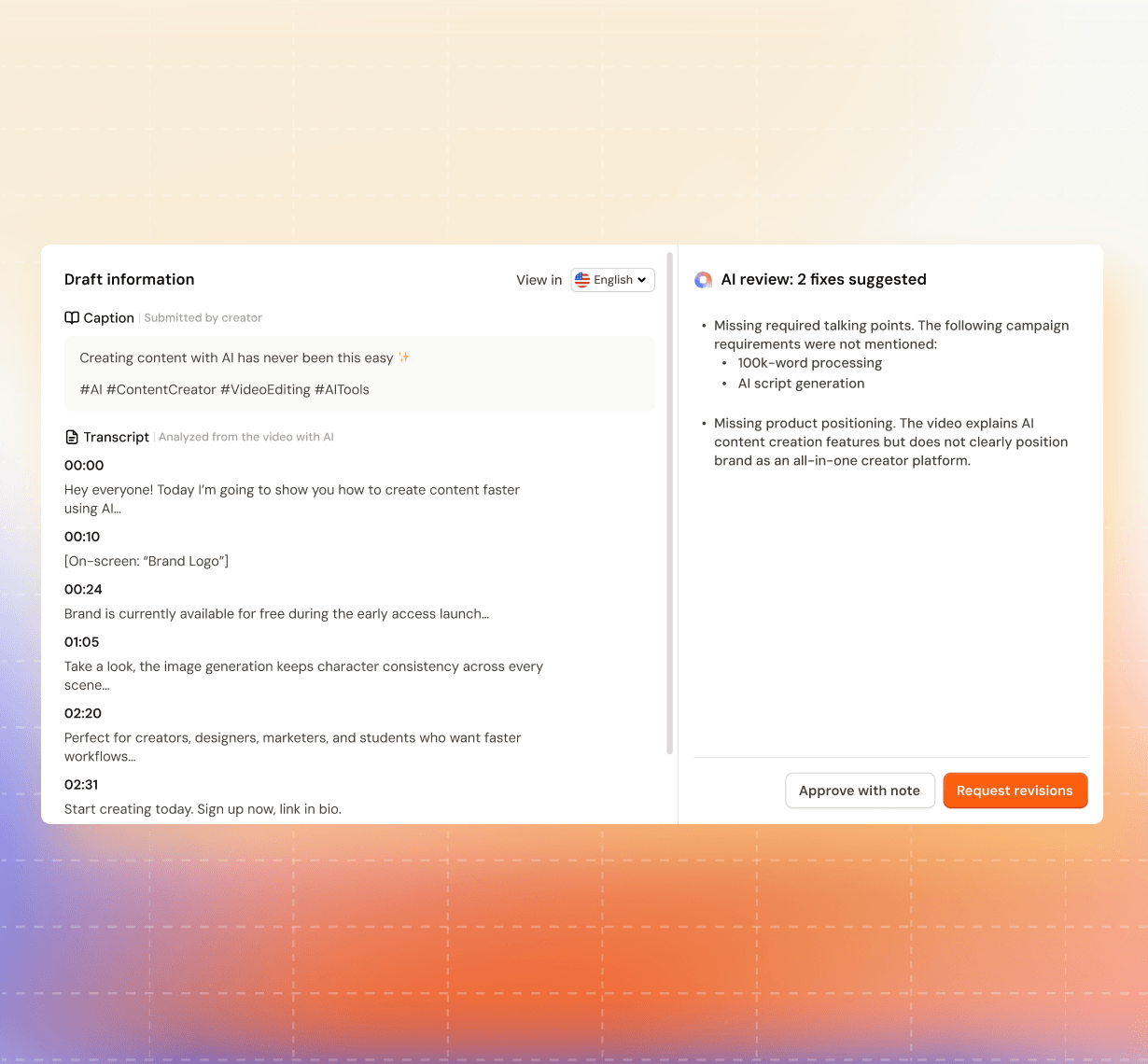
Bring outreach, negotiation, contracts, content review, and campaign tracking together with AhaCreator. Pay creators through the platform and explore how AI supports your team at each stage of a collaboration.
Frequently asked questions
Questions, answered
How much does it cost to hire a content creator?
There is no reliable universal rate. Cost depends on format, production complexity, specialization, creator experience, quantity, turnaround time, expenses, revision rounds, and usage rights. Ask for an itemized quote against a defined brief, and verify current marketplace fees or listed rates when hiring. Compare equivalent scopes rather than headline prices.
Should I hire a content creator or an influencer?
Hire primarily for content creation when you need assets for brand-owned channels or advertising. Hire an influencer when access to the creator’s audience and distribution is central to the assignment. One person can perform both roles, but production fees, posting obligations, audience access, and usage rights should be priced and documented separately.
Should a content creator complete an unpaid test?
A brief discussion exercise may be reasonable, but custom work that produces usable ideas or assets should generally be paid. Keep any test narrow, relevant, time-limited, and consistent across finalists, and state whether the brand may use the submission.
What should a content creator contract include?
It should define deliverables, milestones, responsibilities, revisions, payment, expenses, cancellation, ownership or licensing, usage channels, paid media, duration, territory, exclusivity, attribution, adaptation rights, compliance, AI use, and termination. Material or legally sensitive engagements should be reviewed by qualified counsel.
How many creators should a brand interview?
There is no required number. Interview enough qualified candidates to compare meaningful alternatives without creating unnecessary speculative work. If one referral is clearly suitable, still verify the portfolio, availability, scope, price, and rights before hiring.
Scale creator marketing without scaling busywork
Launch and scale creator partnerships with less manual work and more control.
Sources
- Content Creation freelancersUsed for article body, quick answer, decision rule, comparison matrix